
How to Date Antique Rugs
Antique rugs hold stories woven into every fibre, a silent chronicle of the people, cultures, and homes that have embraced them over decades or even centuries. To truly appreciate such a piece, one must learn to read its subtle markers of age and origin. Dating an antique rug is not simply about assigning a year; it is about understanding the evolution of materials, the cadence of knotting techniques, and the stylistic trends that have shifted through generations. Collections such as Antique Oriental Rugs provide a remarkable opportunity to explore these nuances firsthand, offering pieces that carry both beauty and history.
The Role of Materials
Materials are one of the first indicators of a rug’s age. Early rugs often utilise hand-spun wool, naturally dyed with vegetable and mineral sources, producing hues that deepen gracefully with time. Silk was sometimes incorporated for highlights, lending a refined sheen that contrasts with wool’s matte warmth. The tactile qualities of these fibres – the softness of aged wool, the subtle crispness of silk – can reveal decades of patina, wear, and refinement. Even in a heavily used household, older rugs display a resilience that newer machine-made pieces rarely match. Understanding materials is therefore crucial; it allows collectors and interior enthusiasts alike to sense the passage of time and to distinguish authentic antique pieces from contemporary reproductions.
Weave and Knotting Patterns
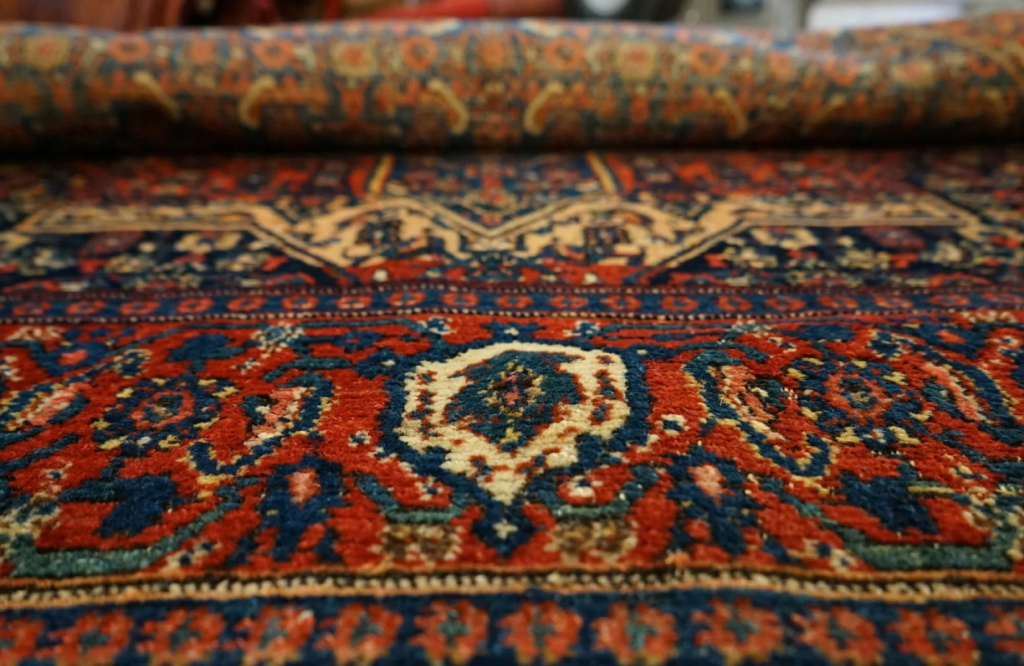
The knotting technique and weave density are equally informative when dating a rug. Antique rugs were hand-knotted with care, often showing slight irregularities that indicate human craftsmanship. The knot count and arrangement can hint at regional origin, as well as the period in which the rug was made. Over time, the structure may loosen slightly, and the pile can develop a soft, lived-in texture that speaks to both age and quality. Rugs with pronounced handmade qualities – uneven edges, slight asymmetry in design, or variations in pile height – tend to carry authenticity and the lived experience of previous generations. For inspiration and comparison, explore a selection of Oriental Area Rugs which highlight diverse regional techniques and styles.
Patterns, Motifs, and Design Evolution
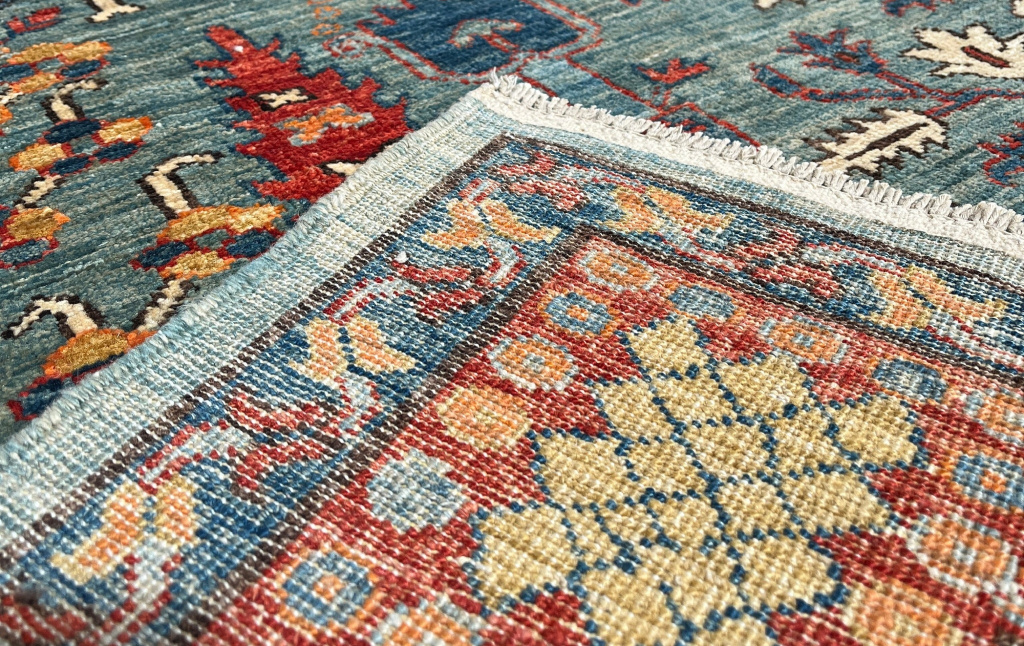
The visual language of a rug provides additional clues to its age. Motifs evolve over decades, influenced by regional culture, trade, and prevailing artistic trends. Certain floral, geometric, or medallion patterns were popular in specific eras, while colour palettes often correspond to natural dyes available at the time. By studying these design elements, one can often narrow the timeframe of production with remarkable accuracy. Antique rugs do not merely decorate a floor; they tell stories, carrying motifs that reflect history, community, and the personal choices of their weavers. Delicate silk highlights are particularly revealing, making Oriental Silk Rugs a fascinating study in design evolution and ageing techniques.
Provenance and Historical Context
Understanding provenance is key to dating an antique rug. Rugs from regions such as Persia, Turkey, and the Caucasus each possess distinctive stylistic and technical markers that evolved over centuries. Records, collector notes, and historical catalogues can further aid in placing a rug in context, providing insight into the social and cultural milieu of its creation. Provenance is not only about verification; it deepens the appreciation of the rug, transforming it from a floor covering into a heritage piece. Antique rugs, whether displayed in a stately drawing room or beneath a contemporary dining table, connect their surroundings to a broader continuum of craftsmanship and human history.
Living with Antique Rugs
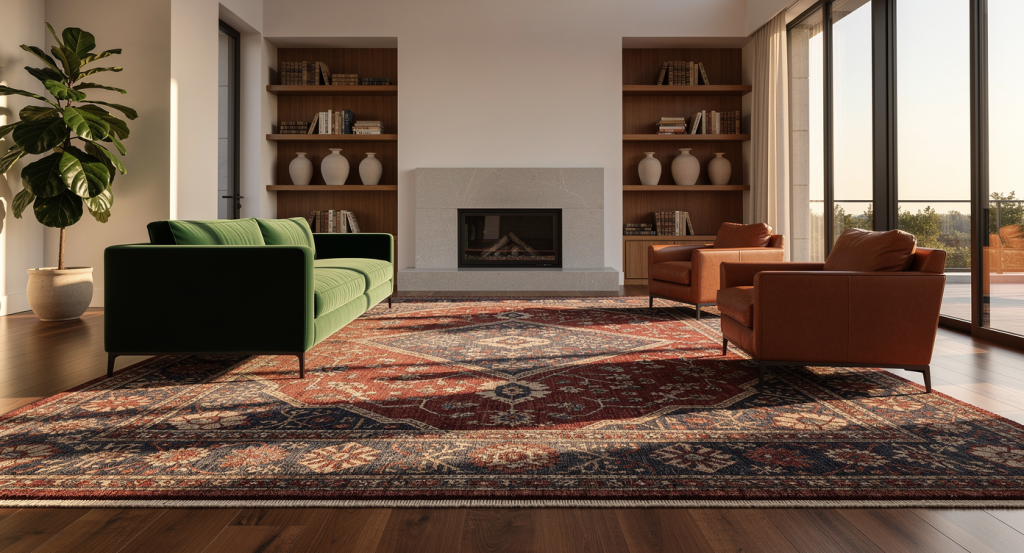
Once the age and authenticity of a rug are established, integrating it into a home becomes a practice in respect and style. Antique rugs adapt beautifully to both modern and traditional interiors, their time-worn charm adding warmth and depth to spaces. Footfall, sunlight, and subtle wear only enhance their character, creating a narrative that is uniquely tied to the home. Maintaining these rugs requires an understanding of their materials and construction, allowing the piece to evolve gracefully over time. Investing in an antique rug is not merely acquiring décor; it is participating in a centuries-old dialogue of artistry, craft, and domestic life.
Conclusion
Dating antique rugs is as much a matter of observation as it is of knowledge. By examining materials, weave, patterns, and provenance, one uncovers the nuanced markers of age that separate the genuine from the imitation. These rugs are storytellers, carrying the echoes of generations into contemporary interiors, enriching spaces with texture, colour, and history. They remind us that style is inseparable from experience and that every home can benefit from the quiet gravitas of a well-chosen antique rug.