
How to Mix Rug Patterns in One Room
Mixing rug patterns in a single room is one of the most effective ways to add depth, movement, and personality to an interior, yet it remains one of the most misunderstood design choices. Many homeowners fear that layering or combining multiple rugs will feel chaotic or visually loud, but when done with intention, the result is often richer and more nuanced than a single statement piece. Rugs operate like artwork underfoot, anchoring furniture while quietly setting the tone for how a room is experienced. When patterns are thoughtfully balanced, they guide the eye rather than overwhelm it, creating a space that feels collected rather than decorated. Understanding a few core principles allows you to experiment confidently without sacrificing cohesion or comfort.
At its best, pattern mixing is not about contrast for its own sake but about creating dialogue between elements in the room. Rugs can echo architectural details, soften hard surfaces, and even correct proportions by visually expanding or narrowing a space. A large patterned rug might establish a foundation, while a smaller accent rug adds character or breaks up expanses of floor. The goal is to let each rug play a specific role instead of competing for attention. Once you start thinking of rugs as layers rather than standalone purchases, the design process becomes far more intuitive.
Start With Scale, Not Color
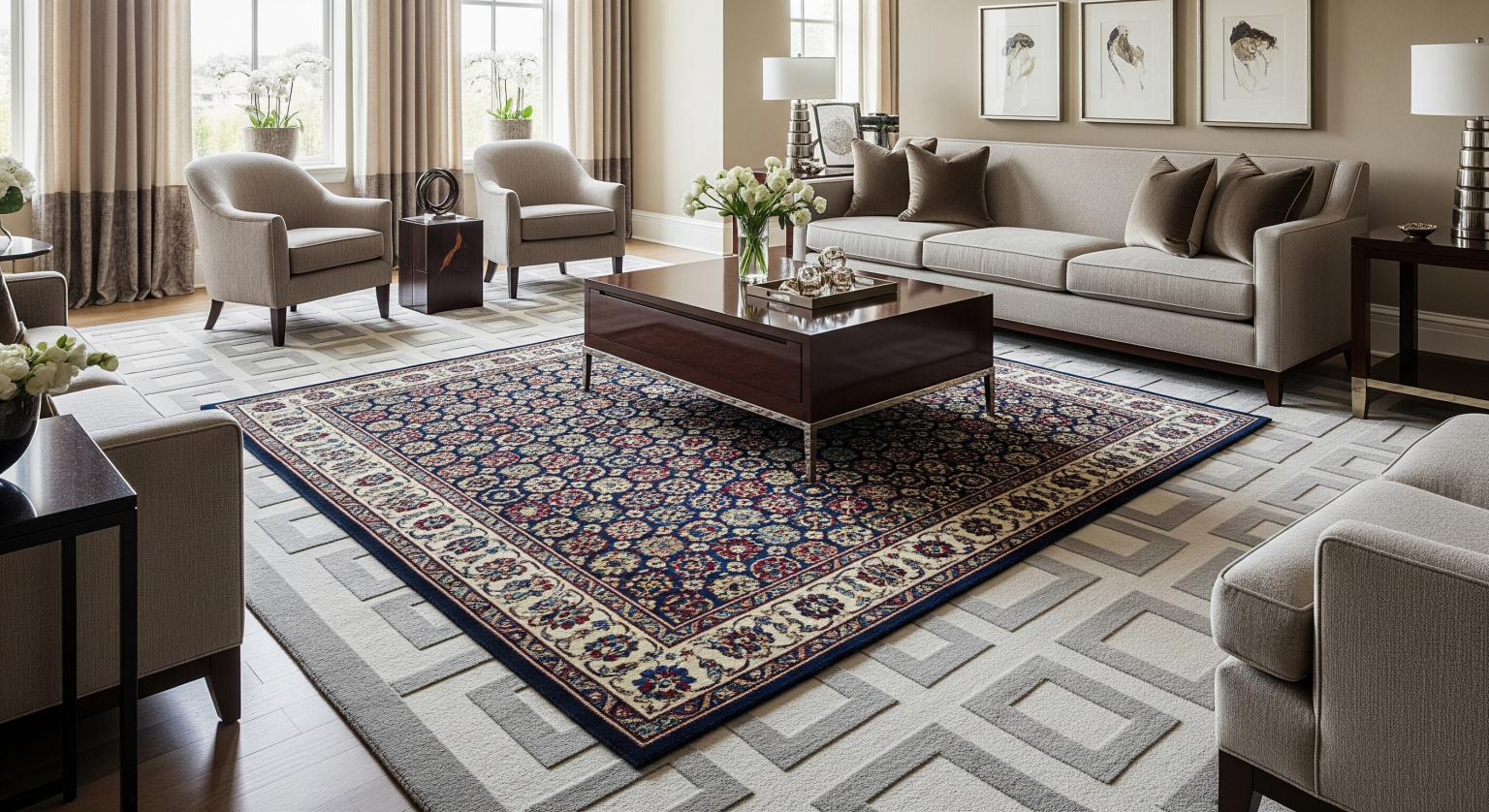
One of the most common mistakes when mixing rug patterns is focusing too early on color while ignoring scale. Pattern scale refers to how large or small the design elements appear relative to the room and to each other. Pairing two rugs with similarly sized motifs often creates visual confusion because the eye has no clear place to rest. Instead, successful combinations usually involve one rug with a large, bold pattern and another with a tighter, more intricate design. This contrast allows both rugs to coexist without blending into visual noise.
Scale also helps define hierarchy within a room, especially in open-plan layouts where multiple rugs help establish zones. A large-scale patterned rug might anchor the main seating area, while a smaller-scale pattern works well under a console or reading nook. Even when patterns are stylistically different, variation in scale gives them breathing room. This principle applies whether you are layering rugs or placing them adjacent to one another. Thinking in terms of dominance and support makes the overall composition feel deliberate rather than accidental.
Let Texture Do Some of the Work
Texture is an often overlooked but powerful tool when mixing rug patterns, especially for interiors that aim to feel warm and lived-in rather than overly styled. A flatwoven rug with a subtle geometric pattern can sit comfortably alongside a plush, high-pile rug with a more expressive design. The contrast in texture helps separate the rugs visually, even if their colors overlap. This approach is particularly effective in neutral spaces where the palette is restrained but the tactile experience is rich. Texture adds dimension without demanding attention.
Different construction techniques naturally lend themselves to pattern mixing because they age and wear in distinct ways. Flatweaves tend to read more graphic and lightweight, making them excellent candidates for layering or secondary zones. Hand-knotted rugs, with their depth and variation, often work best as anchor pieces that ground the room. Combining these types creates a subtle tension between refinement and ease. When texture is thoughtfully considered, pattern mixing feels effortless rather than forced.
For example, placing a flatwoven rug beneath a dining table can provide visual structure without overwhelming the furniture, while a more intricate rug in the living area adds softness and visual weight. This kind of pairing allows each rug to shine in its intended context. Exploring options such as flatwoven area rugs alongside more detailed pieces opens up creative possibilities that go beyond matching patterns alone. Texture becomes a quiet mediator that keeps the room balanced.
Use Color as a Connecting Thread
Once scale and texture are established, color becomes the element that ties everything together. This does not mean every rug must share the same palette, but there should be at least one recurring tone that creates continuity. Even a subtle echo, such as a shared neutral or a muted accent color, can make disparate patterns feel related. Color repetition works best when it is understated rather than literal. Think of it as a visual rhythm rather than a strict rule.
In many cases, the most successful combinations involve a dominant rug that sets the primary palette, with secondary rugs pulling one or two colors from it. This approach allows for experimentation while maintaining harmony. For example, a richly patterned rug might include hints of indigo or rust that can be echoed in a simpler runner or accent rug. These small connections help the eye move smoothly across the space. The result feels cohesive without being predictable.
Think in Terms of Function and Flow
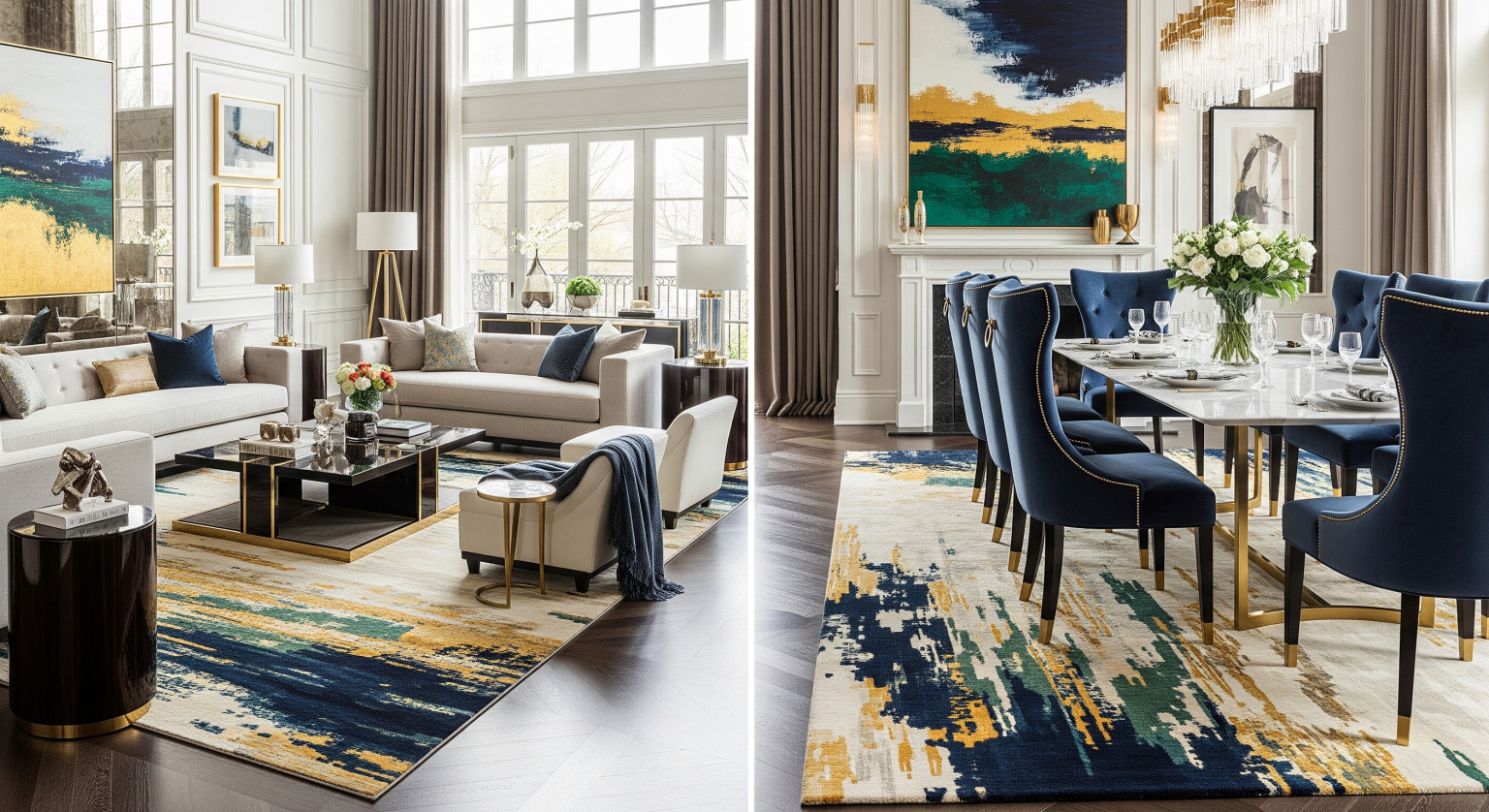
Pattern mixing is most successful when it responds to how a room is actually used. Rugs are not just decorative objects; they define circulation paths, support furniture layouts, and influence how people move through a space. In a large living area, multiple rugs can guide the flow by subtly marking transitions between zones. A patterned rug under a coffee table might encourage gathering, while a quieter pattern near a walkway keeps the space from feeling congested. Function should always inform aesthetic choices.
Considering flow also helps determine how bold or restrained each rug should be. Areas that invite lingering, such as seating zones, can handle more visual complexity because the eye has time to explore the pattern. Transitional areas benefit from simpler designs that do not distract from movement. This balance ensures that the room feels dynamic without becoming tiring. When each rug aligns with its purpose, the overall design feels intuitive.
Quality also plays a role in how patterns age within a functional space. Rugs that experience heavy use benefit from craftsmanship that can withstand wear while maintaining visual integrity. Investing in well-made pieces, such as hand-knotted area rugs, ensures that even complex patterns retain their character over time. When durability meets design, pattern mixing becomes a long-term asset rather than a fleeting trend.
Ultimately, mixing rug patterns is less about following rigid formulas and more about developing an eye for balance. By paying attention to scale, texture, color, and function, you can create interiors that feel layered and personal rather than overly curated. Exploring a wide range of styles and constructions, like those found at SayRUG’s rug collection, makes it easier to find combinations that resonate with your space. The most compelling rooms often tell a story through their details, and thoughtfully mixed rugs are an elegant way to begin that narrative. With patience and a willingness to experiment, pattern mixing becomes an expression of confidence rather than a design risk.