
How to Place Two Rugs in a Large Living Room
A large living room offers design freedom, but without structure it can feel unfinished or disconnected. When a single oversized rug fails to anchor every seating zone, introducing a second rug becomes a practical solution. Two rugs can define functional areas, balance proportions, and improve visual flow across an expansive floor plan. The key is deliberate placement rather than decorative excess. With correct sizing and coordination, dual rugs create order instead of clutter.
Most large living rooms include more than one activity area. There may be a main seating arrangement centered around a coffee table, plus a reading corner, secondary sofa grouping, or transition space toward a dining area. Trying to force all of these onto one rug often results in awkward scaling. Dividing the space with two rugs allows each zone to feel grounded while maintaining an overall cohesive design language.
Start by Defining Clear Zones
Before choosing rugs, analyze how the room functions daily. Identify the primary seating area and determine whether there is a secondary conversation group, media zone, or quiet corner. Each of these areas should have visual definition through furniture placement first. The rug then supports that layout rather than dictating it.
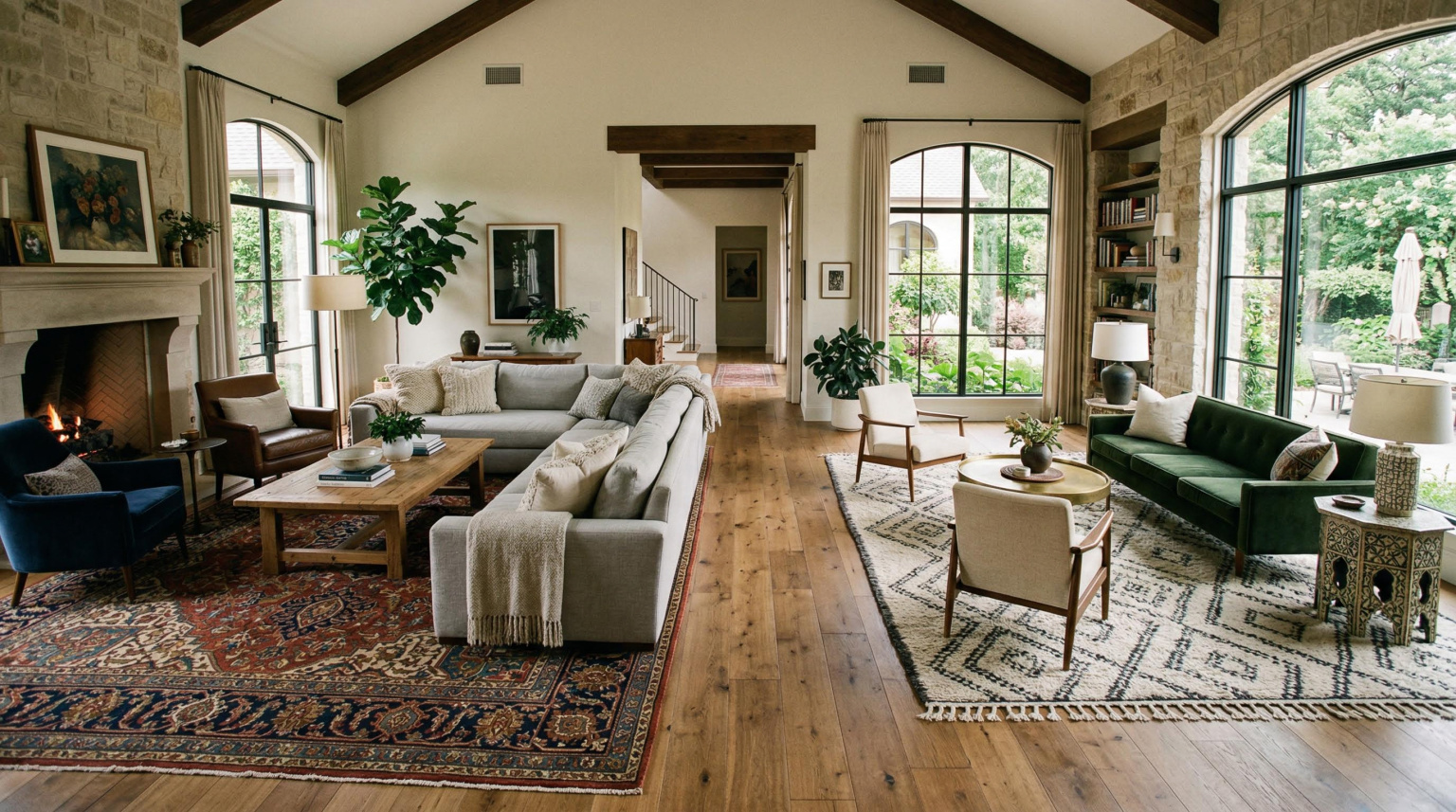
For the main seating area, select a rug large enough to anchor at least the front legs of all sofas and chairs. In more generous layouts, placing all furniture legs on the rug creates a unified base. The second rug should correspond only to its designated area, such as two accent chairs and a side table. Avoid placing a rug in an empty part of the room without associated furniture, as this weakens its purpose.
Choose Sizes That Reflect Hierarchy
When placing two rugs in a large living room, size determines visual hierarchy. The primary rug should be noticeably larger than the secondary rug if the main seating area carries more weight. Equal-sized rugs can work in symmetrical layouts, but in most modern spaces, one zone naturally dominates. Reflecting this difference in scale prevents competition between rugs.
Explore appropriately scaled options when browsing collections of living room area rugs. A common layout uses a large 9x12 or 10x14 rug for the main seating zone, paired with a smaller 6x9 or 8x10 rug for a secondary grouping. These proportions maintain balance while allowing each area to function independently. Undersized rugs should be avoided, as they fragment rather than anchor the space.
Coordinate, Do Not Compete
Two rugs should relate visually without appearing identical. Coordination can be achieved through shared undertones, similar materials, or complementary patterns. For example, a textured neutral wool rug may ground the primary seating area, while a patterned rug with subtle matching tones defines the secondary space. This creates cohesion without repetition.
If you prefer refined finishes, consider pairing understated textures with elevated materials found in curated selections of luxury area rugs. A muted, high-quality wool base rug can support a more decorative accent rug layered nearby. What matters most is maintaining a consistent design direction across both pieces. Avoid placing two bold, unrelated patterns in direct proximity unless the room is intentionally eclectic.
Align Rugs with Furniture and Architecture
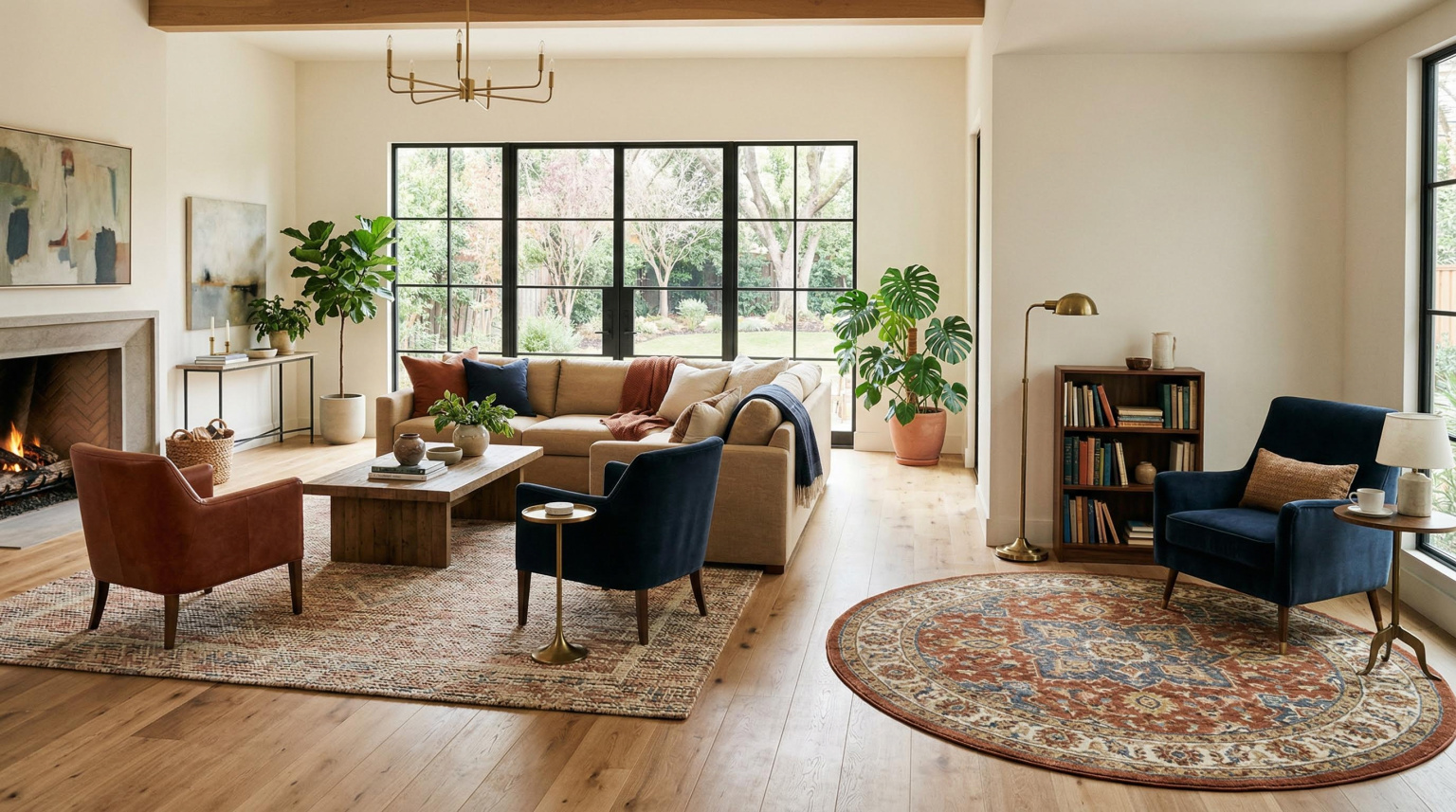
Alignment reinforces structure. Both rugs should sit parallel to the room’s walls or major furniture lines. Angled placement introduces tension unless the architecture itself is angled. Each rug must feel integrated with the seating group it supports rather than centered randomly within the room.
Spacing between rugs also matters. Leave enough exposed flooring between separate rugs to maintain clarity, typically 12 to 24 inches depending on room size. This negative space acts as a visual pause and prevents overcrowding. When rugs are too close together without intention, the layout can feel compressed.
Consider Layering for Depth
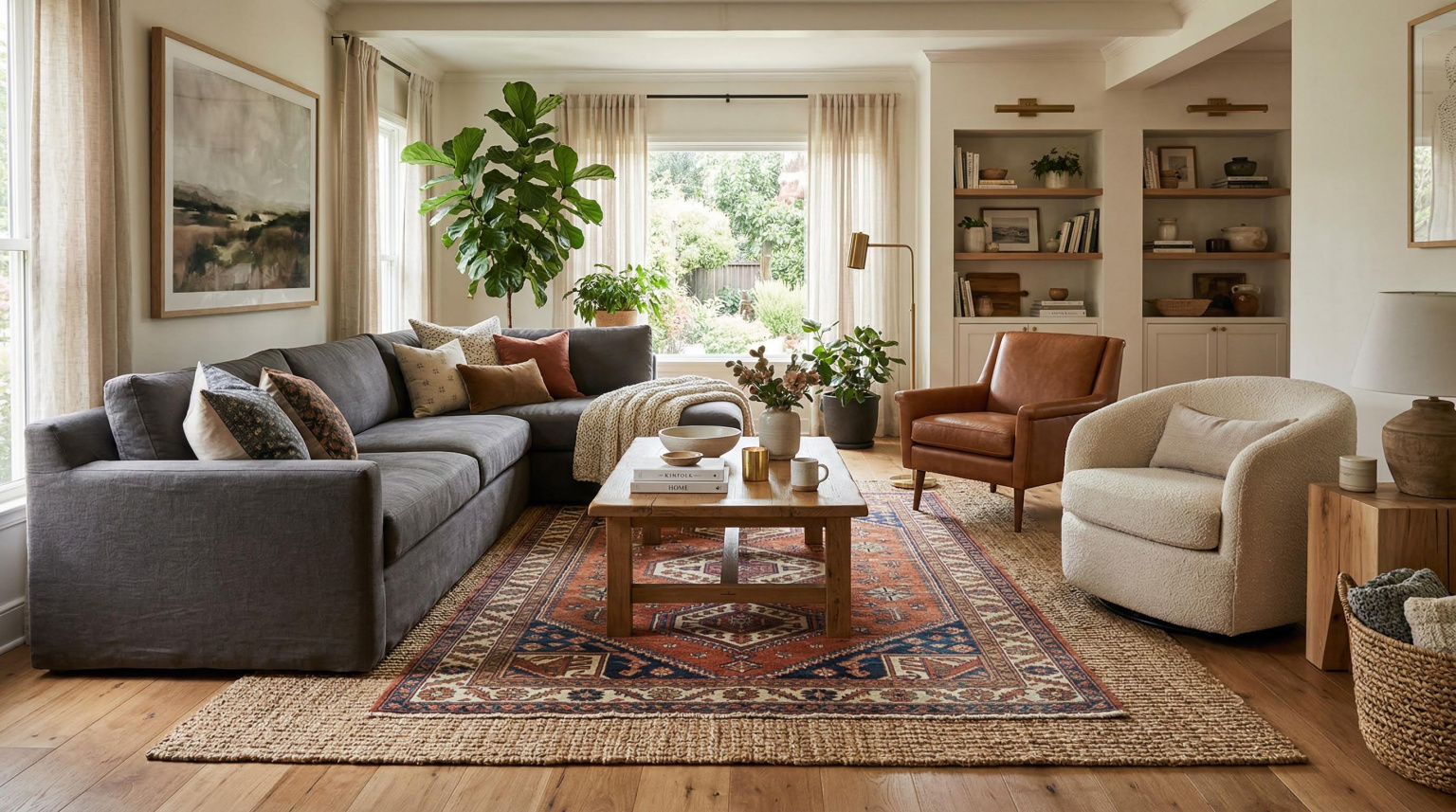
In some large living rooms, layering provides a structured alternative to separation. A large neutral rug can extend across most of the seating zone, while a smaller statement rug sits on top beneath the coffee table. This method introduces dimension while preserving overall cohesion. The bottom rug should extend visibly beyond the upper rug on all sides to frame it properly.
Layering works particularly well when you want to add pattern without overwhelming the room. The base rug stabilizes the layout, and the top rug draws attention to the focal point. Both layers must align with the furniture footprint to avoid appearing accidental. Precision in placement ensures a composed result.
Protect Traffic Flow
Large living rooms often connect to hallways, dining spaces, or outdoor areas. Rug placement should never obstruct primary walking paths. Ensure that edges do not intersect heavily trafficked routes, and avoid overlapping corners that could cause instability. Rug pads beneath both pieces keep them secure and flat.
Clear circulation enhances comfort and preserves the room’s openness. Rugs should define seating zones without blocking movement between them. When placed with intention, they guide the eye and body naturally through the space.
Final Layout Principles
Placing two rugs in a large living room requires clear hierarchy, proportional sizing, and coordinated design. Define functional zones first, then select rugs that anchor each area without competing visually. Maintain alignment with architectural lines and leave appropriate spacing between pieces. Ensure that traffic flow remains uninterrupted.
When thoughtfully executed, two rugs bring structure to expansive interiors. They transform open floor space into organized zones, enhance balance, and support the overall composition of the room. Rather than overwhelming the design, dual rugs become a strategic tool that refines scale and improves functionality.