
How to Position a Rug Under a Sectional
A sectional sofa anchors a room by its scale alone, but without a properly positioned rug beneath it, the layout can feel incomplete. The rug defines the seating zone, stabilizes proportions, and visually connects the sectional to surrounding furniture. Because sectionals vary in shape and depth, rug placement requires more than simply centering a rectangle under the coffee table. The goal is to create balance, ensure comfort, and maintain clear walkways. Correct positioning transforms a sectional from a large object into part of a cohesive arrangement.
The first step is choosing the right rug size. A rug that is too small will float in front of the sectional, breaking visual continuity. A rug that is too large may overwhelm the room and crowd circulation paths. Ideally, the rug should extend beyond the edges of the sectional to frame it rather than sit awkwardly beneath one corner. Size determines whether the seating area feels intentional or improvised.
Front Legs On vs. All Legs On
The most common approach is placing the front legs of the sectional on the rug while keeping the back legs off. This method works well in medium-sized living rooms where space is limited but cohesion is still important. By anchoring only the front legs, the rug visually connects the seating group without requiring oversized dimensions. It also keeps material costs practical while maintaining proportion.
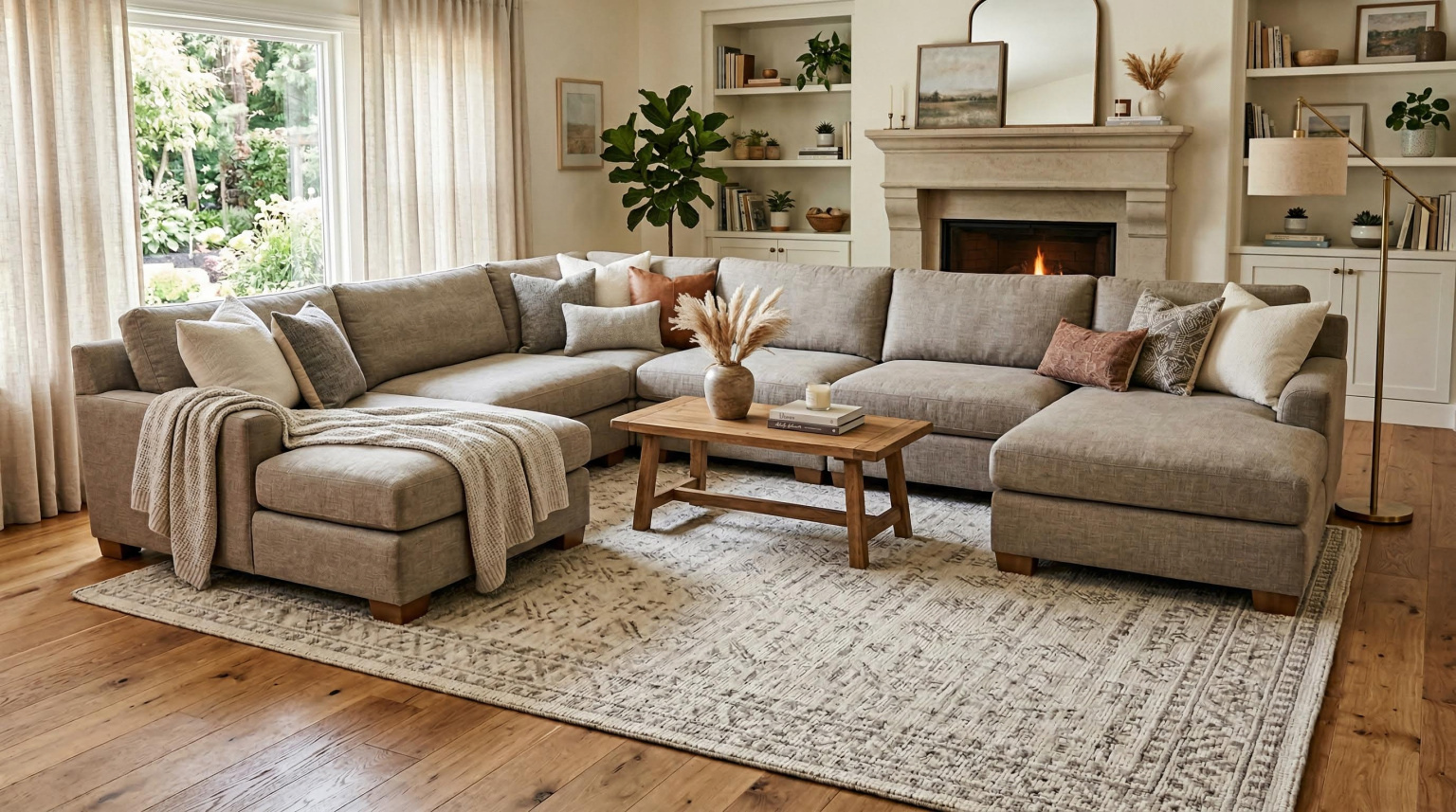
In larger rooms, placing all legs of the sectional on the rug creates a more unified composition. The rug should extend at least 6 to 12 inches beyond the outer edges of the sectional to avoid a cramped look. This arrangement works particularly well in open-plan spaces where the rug defines a specific conversation zone. It prevents the sectional from appearing disconnected from the rest of the layout.
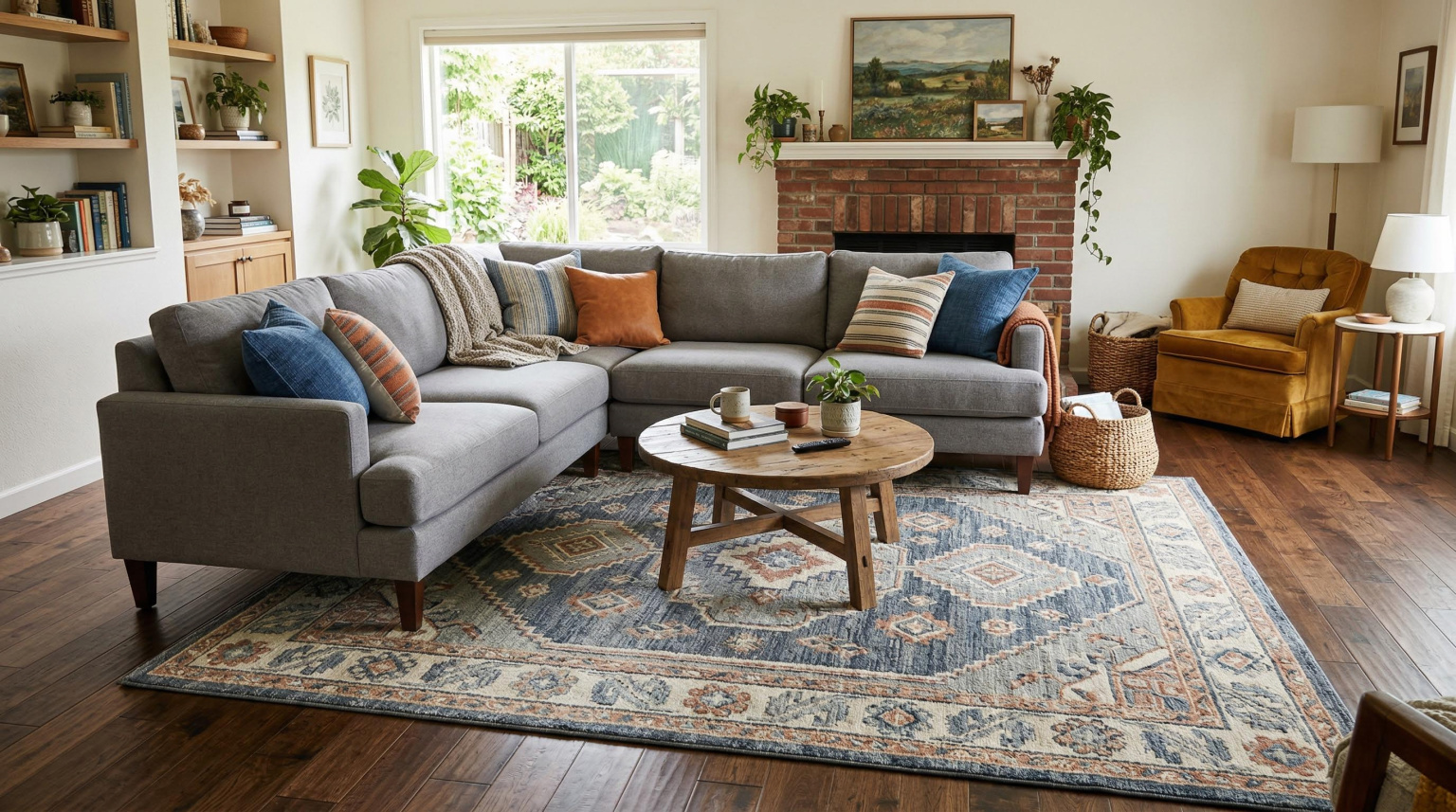
If the room is especially spacious, allowing generous rug borders around the sectional adds breathing room. A wide margin of visible rug softens the geometry of an L-shaped sofa. This technique also ensures that adjacent chairs or side tables can sit partially on the rug without imbalance. The key is symmetry along the longest visible edges.
Rug Placement for L-Shaped and U-Shaped Sectionals
L-shaped sectionals are the most common configuration and require careful alignment. The rug should follow the orientation of the sectional, typically placed parallel to its longest side. Center the rug under the main seating area rather than the corner joint. This ensures that the visual weight is distributed evenly across the space.
For U-shaped sectionals, the rug should sit fully within the open center of the seating arrangement. In most cases, a large rectangular rug works better than multiple smaller rugs. The coffee table should rest entirely on the rug, maintaining consistent proportions between furniture and textile. This setup reinforces the sectional’s role as a central gathering point.
Round rugs can work with curved or modular sectionals, but only when the room allows enough clearance around the perimeter. The curve of the rug should complement the sectional rather than clash with its angles. When using a round rug, ensure it is large enough so that at least the front legs of all seating pieces rest on it. Otherwise, the arrangement may look fragmented.
Balancing Proportion and Traffic Flow
Positioning a rug under a sectional should never obstruct natural walking paths. Leave at least 24 to 30 inches of clear space for main circulation areas. If the sectional floats in the center of the room, the rug can extend evenly around it. If the sectional is against a wall, the rug should still extend far enough forward to support a coffee table and foot traffic.
In compact rooms, consider slightly tucking the rug under the sectional’s chaise portion. This visually anchors the extended section without crowding the main seating. Avoid placing a small rug only under the chaise, as this creates imbalance. Consistency across the sectional’s footprint maintains visual stability.
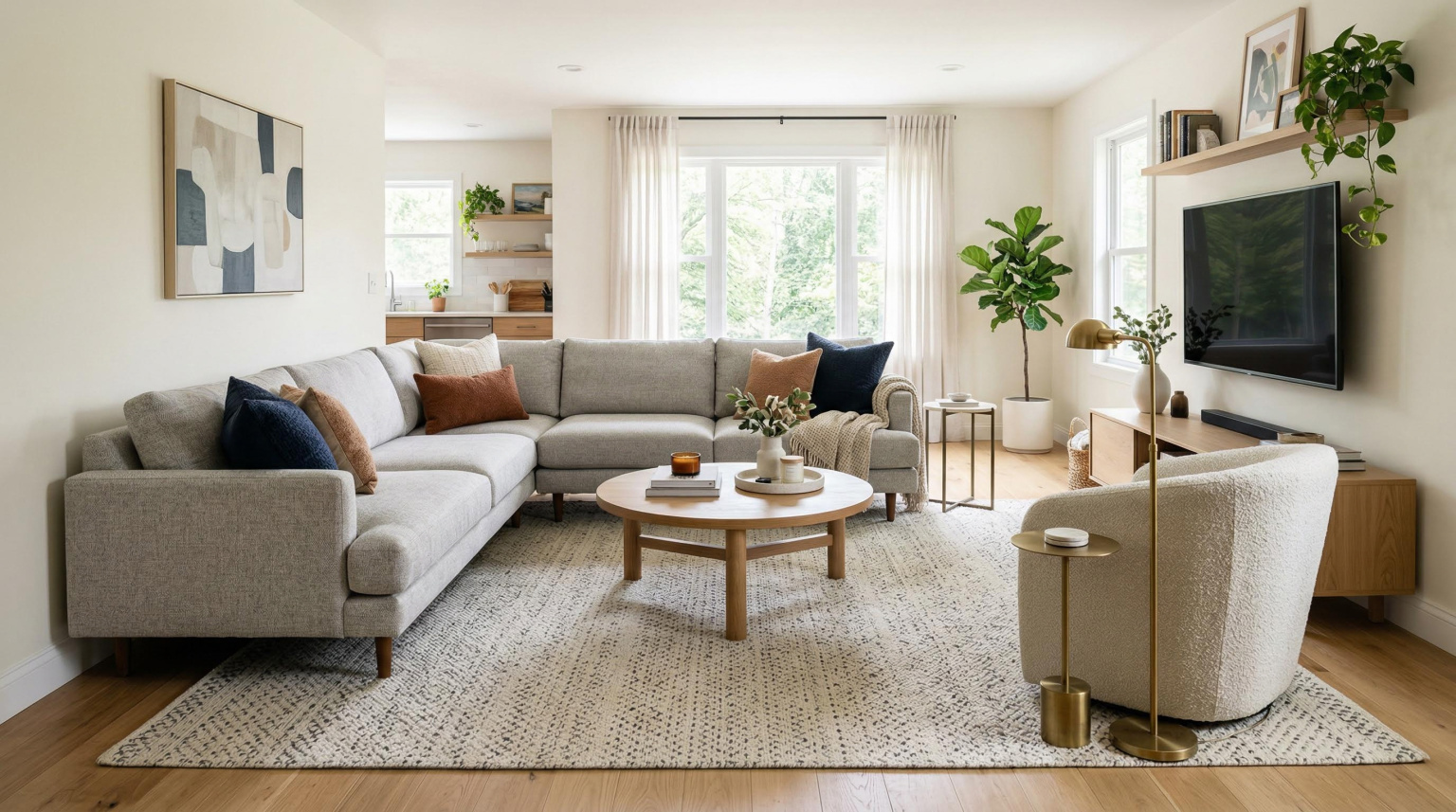
Thickness also plays a role in comfort and functionality. A medium-pile rug provides softness underfoot without interfering with furniture legs. Extremely thick rugs can cause uneven seating or door clearance issues. Choosing a rug with stable density ensures the sectional remains level and secure.
Common Mistakes to Avoid
One of the most frequent mistakes is selecting a rug that is too small. When a rug barely touches the edge of a sectional, the furniture appears disconnected from the rest of the room. Another error is misalignment, where the rug is centered in the room but not aligned with the sectional. The rug should relate directly to the seating arrangement, not the architectural center of the space.
Avoid placing the rug diagonally unless the sectional is also angled, which is rare. Misaligned angles create tension and disrupt flow. Additionally, do not let the rug stop short of the coffee table. The table should rest entirely on the rug to maintain visual coherence.
Layering rugs can work beneath a sectional, but only when proportions are carefully managed. A large neutral base rug with a smaller patterned rug on top can define the seating area while adding depth. Both layers must extend sufficiently under the sectional to avoid appearing decorative rather than functional.
Final Layout Principles
When positioning a rug under a sectional, prioritize proportion, alignment, and circulation. The rug should frame the seating area clearly, support at least the front legs of the sectional, and extend beyond its edges. In larger rooms, placing all legs on the rug creates a grounded, cohesive layout. In smaller spaces, front-leg placement offers balance without overwhelming the floor.
A well-positioned rug transforms a sectional from a standalone piece into part of an integrated design. It defines the conversation zone, softens acoustics, and stabilizes the room visually. With the right size and placement, the sectional and rug function as a single composed element rather than separate furnishings. Careful positioning ensures comfort, structure, and long-term design clarity.