
What Is a Hooked Rug?
A hooked rug is a type of handmade rug created by pulling loops of yarn or fabric strips through a stiff woven backing using a specialized hook tool. Unlike woven or knotted rugs that are built on a loom, hooked rugs are constructed by drawing material up from beneath the foundation, forming a textured surface of raised loops. This technique produces a distinct, slightly dimensional finish that is both decorative and durable. Hooked rugs are valued for their handcrafted character and graphic clarity.
The defining feature of a hooked rug is its looped pile, which remains uncut on the surface. Each loop is individually pulled through the backing, creating a pattern that is both tactile and visually structured. The backing is usually made of burlap, linen, or cotton, providing a firm base that supports the loops. Because the design is formed loop by loop, hooked rugs allow for precise shapes and bold color contrasts.
How Hooked Rugs Are Made
The process of rug hooking begins with a pattern drawn directly onto the backing fabric. Using a hook tool, the maker pulls yarn or fabric strips through the foundation from the back to the front. Each loop is held in place by the tension of the surrounding fibers, eliminating the need for adhesive. The loops can be kept at a consistent height or varied to create subtle texture differences.
This method differs from tufting, where yarn is punched into a backing with a tufting gun and secured with latex. Hooked rugs rely on manual tension and placement rather than glue for their structure. The result is a surface that feels dense yet flexible. Because the loops remain intact, the rug maintains a uniform texture across its design.
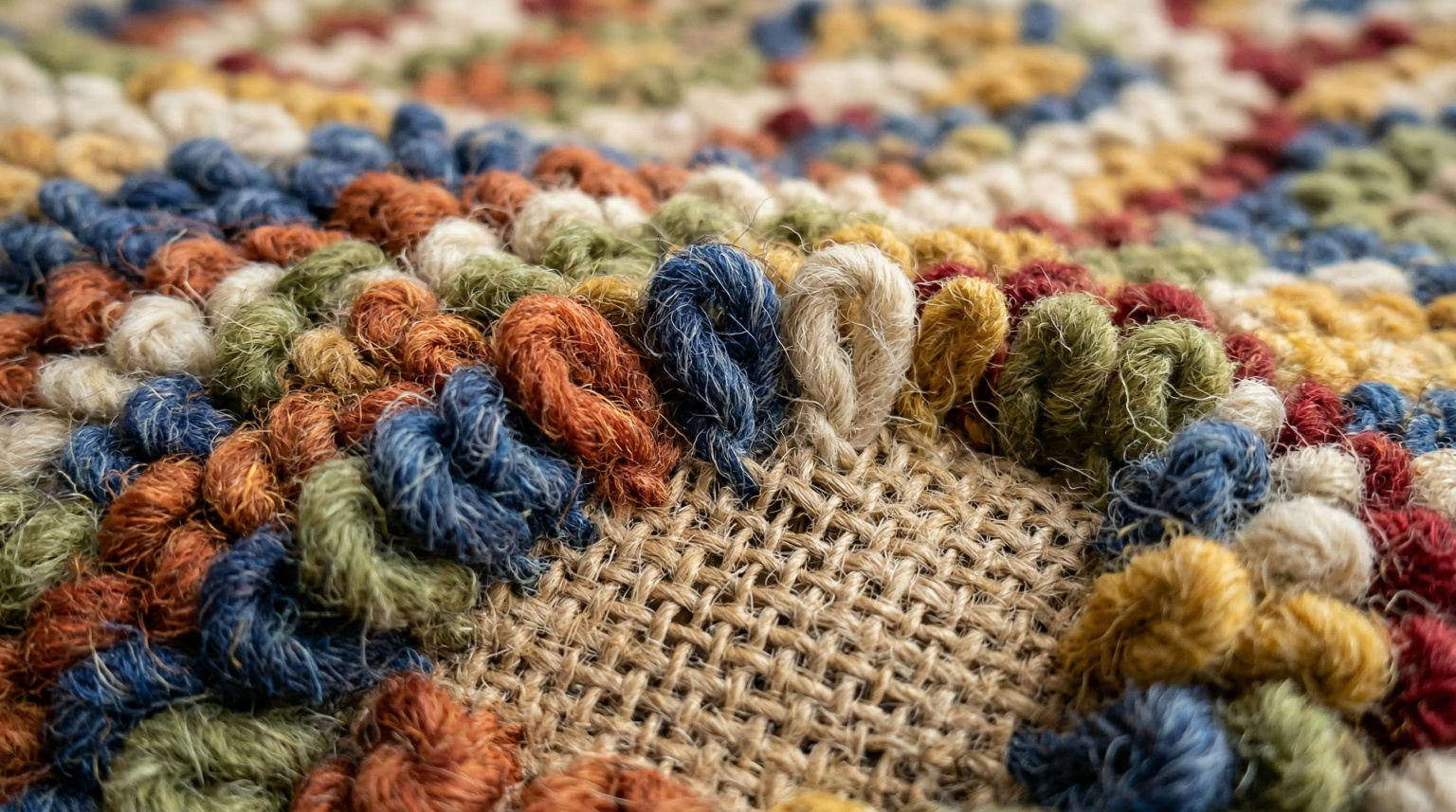
Hooked rugs can be made from wool, cotton, or recycled fabric strips, depending on the desired finish. Wool is the most common material due to its durability and ability to hold saturated color. Fabric strip hooking produces a softer, more rustic look, often associated with traditional American folk art. The choice of material influences both appearance and longevity.
History and Design Characteristics
Hooked rugs have strong roots in North American craft traditions, particularly in the 19th century. Originally created from repurposed fabric scraps, they were practical household items designed to insulate floors. Over time, the technique evolved into a respected decorative art form. Many antique hooked rugs feature floral motifs, geometric borders, or pictorial scenes.
Modern hooked rugs often reinterpret these traditional motifs with updated color palettes and simplified shapes. The looped surface gives designs a slightly raised outline, enhancing graphic definition. Because patterns are created manually, hooked rugs often have clear, bold compositions rather than intricate, high-knot detailing. This makes them well suited to interiors that value texture and craftsmanship.
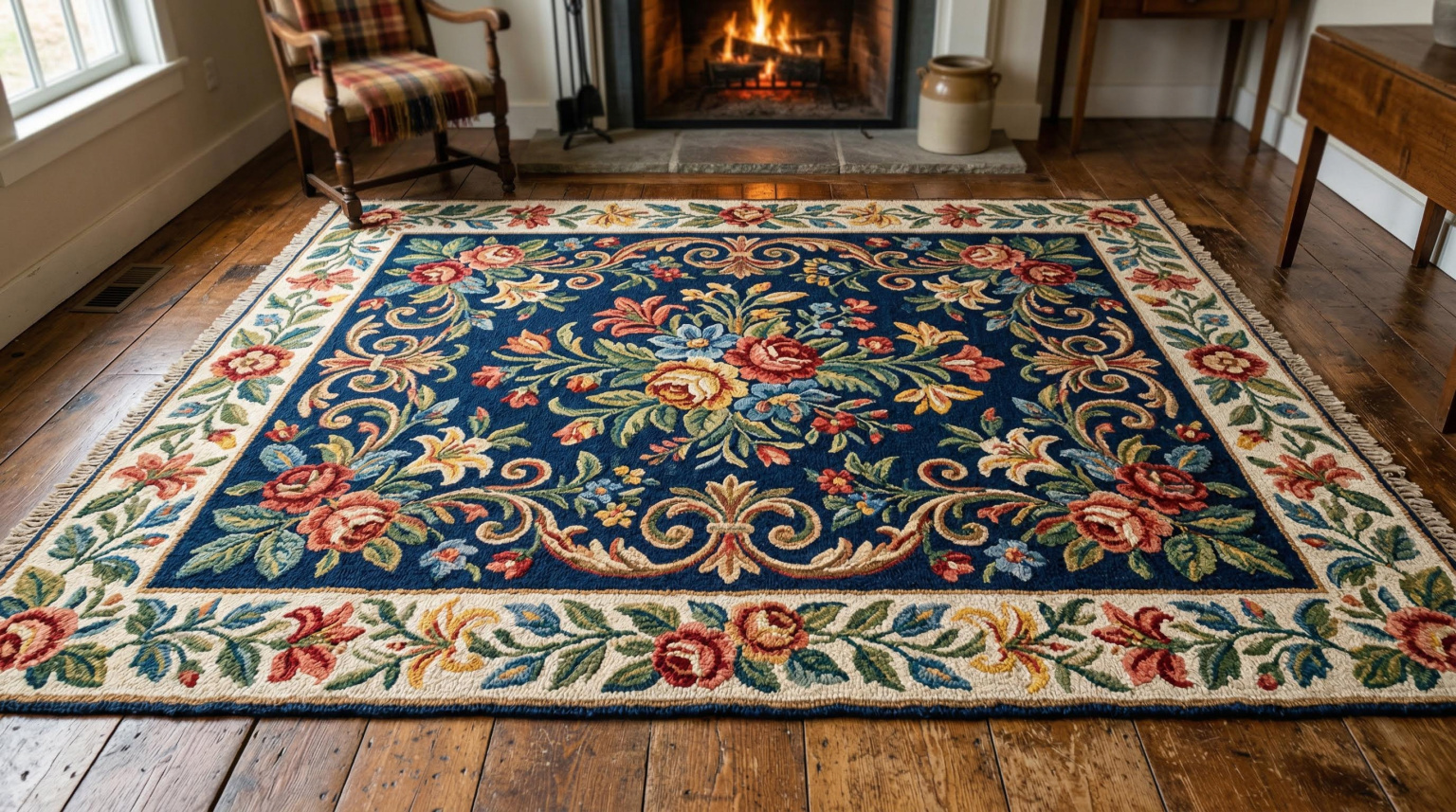
The structured loop texture also affects how light interacts with the surface. Unlike cut pile rugs, which reflect light more evenly, hooked rugs create small shadows between loops. This subtle depth enhances contrast within patterns. Designers often use hooked rugs to introduce visual interest without overwhelming a space.
Hooked Rugs vs. Other Handmade Rugs
Hooked rugs differ significantly from hand-knotted and flatwoven rugs. Hand-knotted rugs are constructed by tying individual knots around warp threads on a loom, creating a dense pile. Flatweaves are formed by interlacing warp and weft threads without raised loops. Hooked rugs, by contrast, build their surface by pulling loops through an existing backing.
This structural difference affects thickness and durability. Hooked rugs are generally thicker than flatweaves but less dense than finely knotted rugs. They provide moderate cushioning and are suitable for living rooms, bedrooms, and casual dining areas. While they can handle regular foot traffic, extremely high-traffic spaces may require tighter woven alternatives.
For homeowners exploring handcrafted floor coverings, collections such as handmade area rugs offer insight into the range of techniques available. Understanding the distinctions between hooking, knotting, and weaving ensures the right rug is selected for both aesthetic and practical needs. Each technique brings its own structural qualities and design potential.
Where Hooked Rugs Work Best
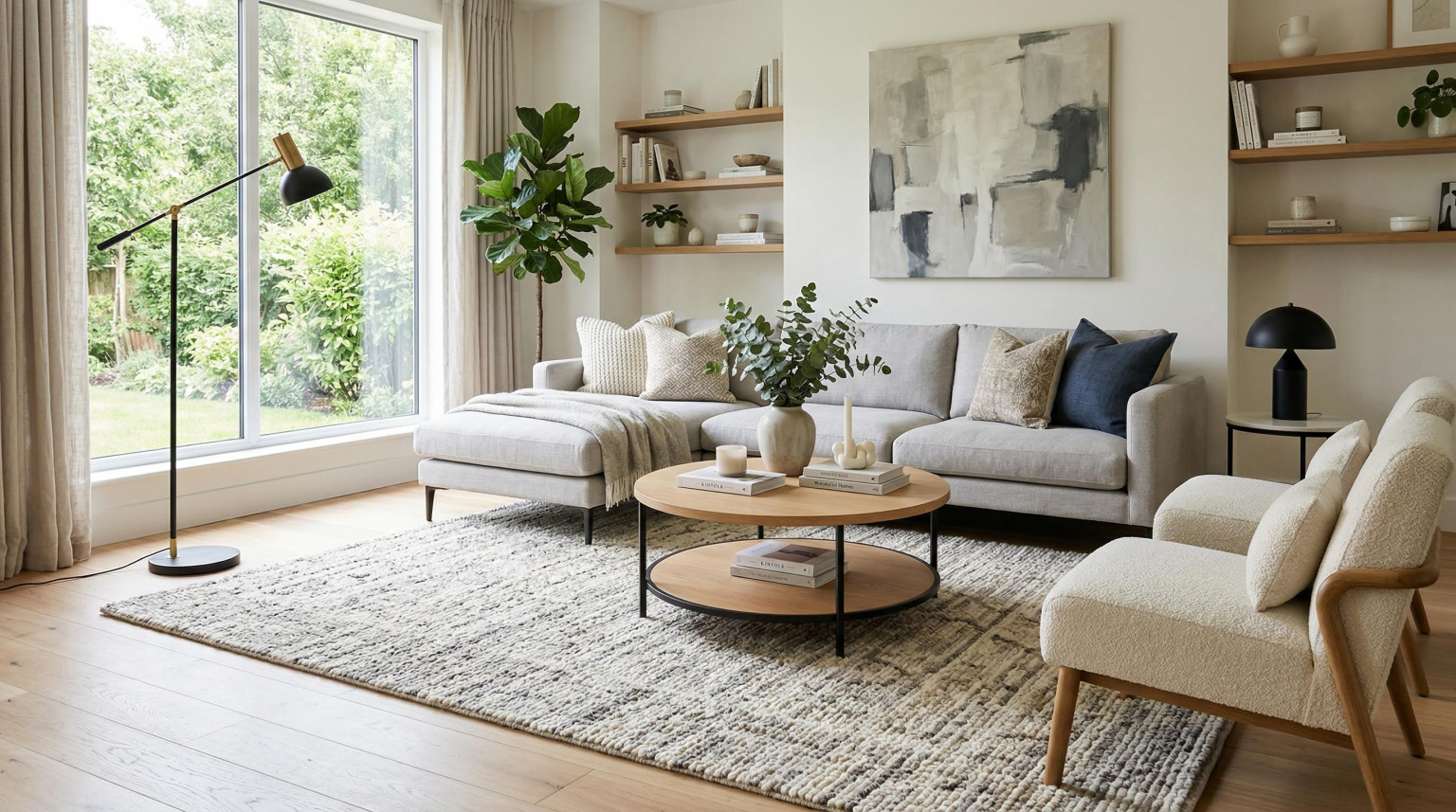
Hooked rugs perform well in interiors that emphasize warmth and visible craftsmanship. Their looped texture complements natural materials such as wood floors, linen upholstery, and matte-painted walls. In contemporary settings, a monochrome hooked rug adds texture without visual clutter. In traditional homes, patterned versions reinforce architectural details and classic furniture lines.
Because the loops sit upright, hooked rugs should be placed where snagging is unlikely. Keeping them away from sharp furniture edges or pets with strong claws helps preserve their surface. Regular vacuuming without aggressive beater bars maintains loop integrity. With proper care, a wool hooked rug can retain its shape and color for many years.
A hooked rug is defined by its loop-by-loop construction and tactile surface. It offers a balance of durability, handcrafted character, and graphic clarity. By understanding how it differs from woven and knotted rugs, homeowners can choose a piece that aligns with their interior style and daily use. In spaces that benefit from texture and visible craft, hooked rugs provide both structure and personality.