
What Is a Needlepoint Rug?
A needlepoint rug is a hand-stitched floor covering created by sewing yarn through a stiff canvas foundation using a needle rather than tying knots or weaving threads on a loom. The design is formed stitch by stitch, following a printed or hand-drawn pattern on an open mesh canvas. Unlike knotted or woven constructions, needlepoint rugs rely entirely on surface embroidery to build both image and texture. The result is a flat, tightly stitched rug known for its refined detail and decorative precision.
This technique produces a smooth, even surface with a low profile, making needlepoint rugs distinct from thick pile carpets. Because each stitch is placed individually, the method allows for controlled color transitions and intricate motifs. Florals, architectural borders, and classical medallions are common, though contemporary geometric compositions are increasingly popular. Needlepoint rugs are recognized less for plush comfort and more for craftsmanship and clarity of design.
How a Needlepoint Rug Is Made
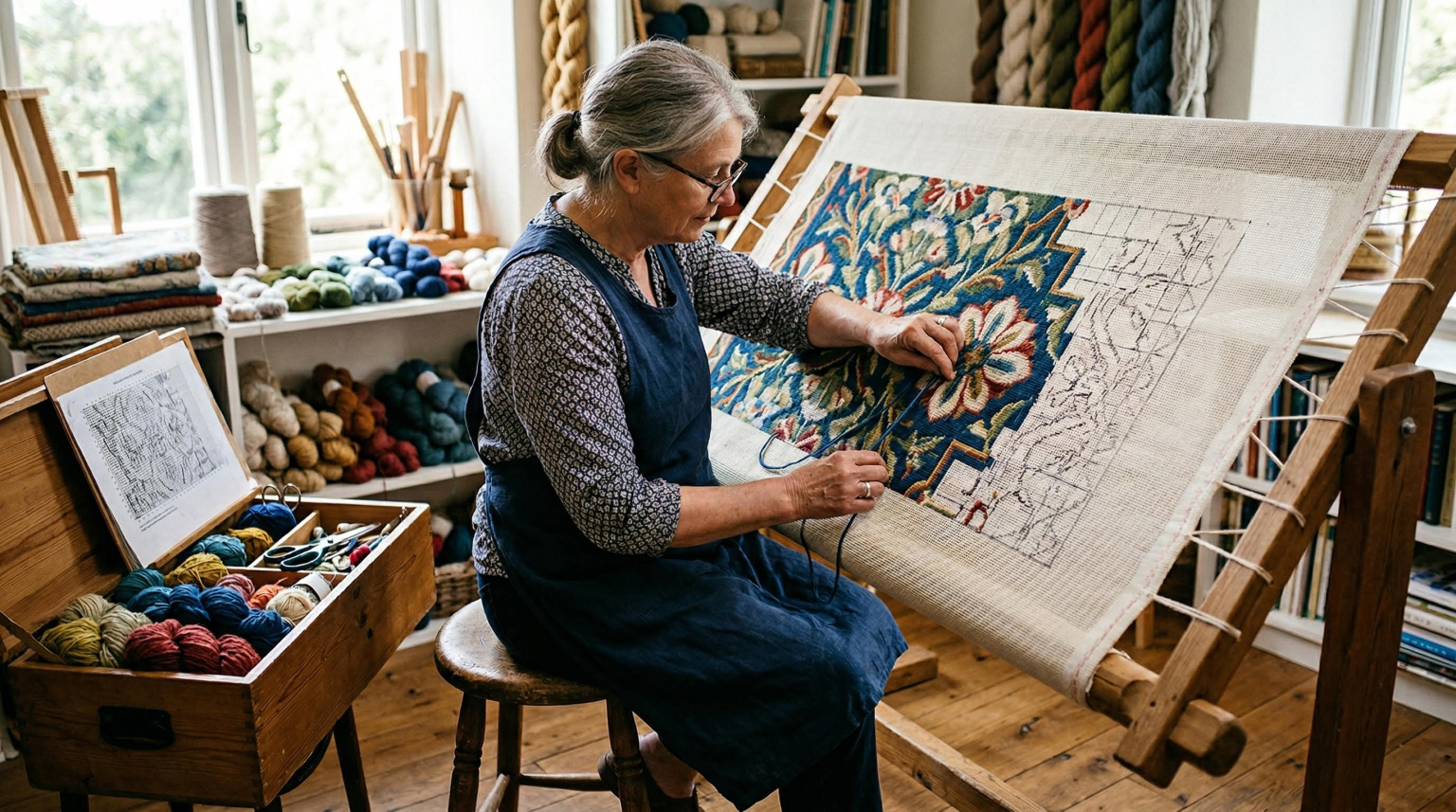
The process begins with a heavy cotton canvas stretched on a frame. The canvas is marked with a pattern, either printed directly onto the grid or drawn as a guide. Using wool yarn, the maker stitches across the intersections of the mesh, typically in a diagonal tent stitch that fully covers the foundation. Each stitch overlaps slightly with the next, creating a durable and compact surface.
Unlike woven rugs, where warp and weft threads interlock structurally, needlepoint rugs build their design entirely on top of an existing base. The strength of the rug depends on the density and consistency of the stitching rather than on interlaced threads. Once completed, the rug is reinforced with a backing fabric to stabilize the stitched surface. This layered construction ensures that the embroidery remains intact under regular use.
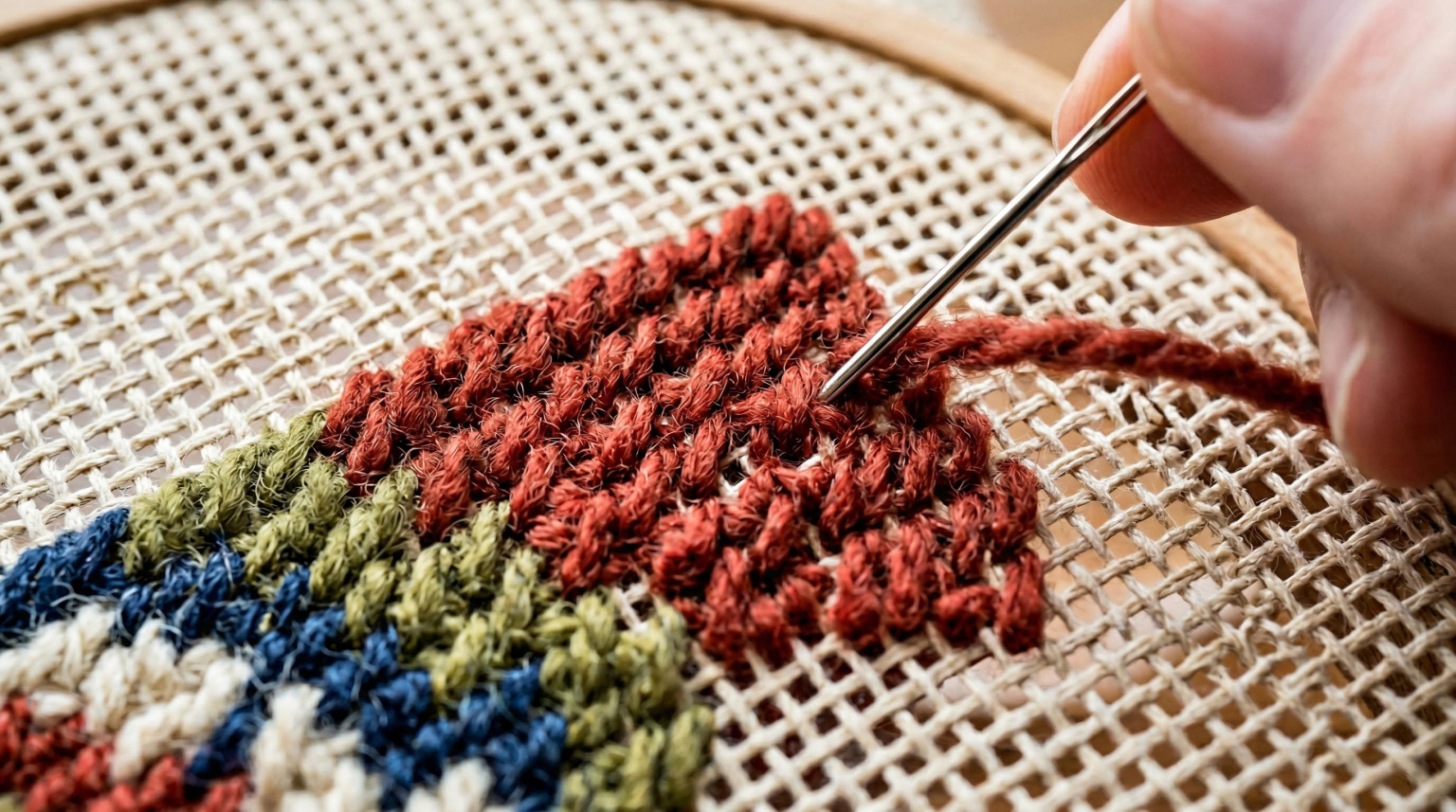
The wool used in needlepoint rugs is often tightly spun to maintain clean lines within complex designs. Because the stitches are small and closely spaced, color changes can be handled with precision. This allows artisans to create shaded petals, scrolling vines, and detailed borders that would require high knot density in a woven rug. The technique is meticulous and time-intensive, which contributes to the value of well-made pieces.
Needlepoint vs. Woven and Knotted Rugs
Understanding how needlepoint rugs differ from other constructions clarifies their role in interior design. Hand-knotted rugs are made by tying individual knots around warp threads on a loom, producing a raised pile. Flatweaves are created by interlacing warp and weft threads without pile. Needlepoint rugs, by contrast, involve stitching yarn through canvas, forming a flat embroidered surface rather than a woven one.
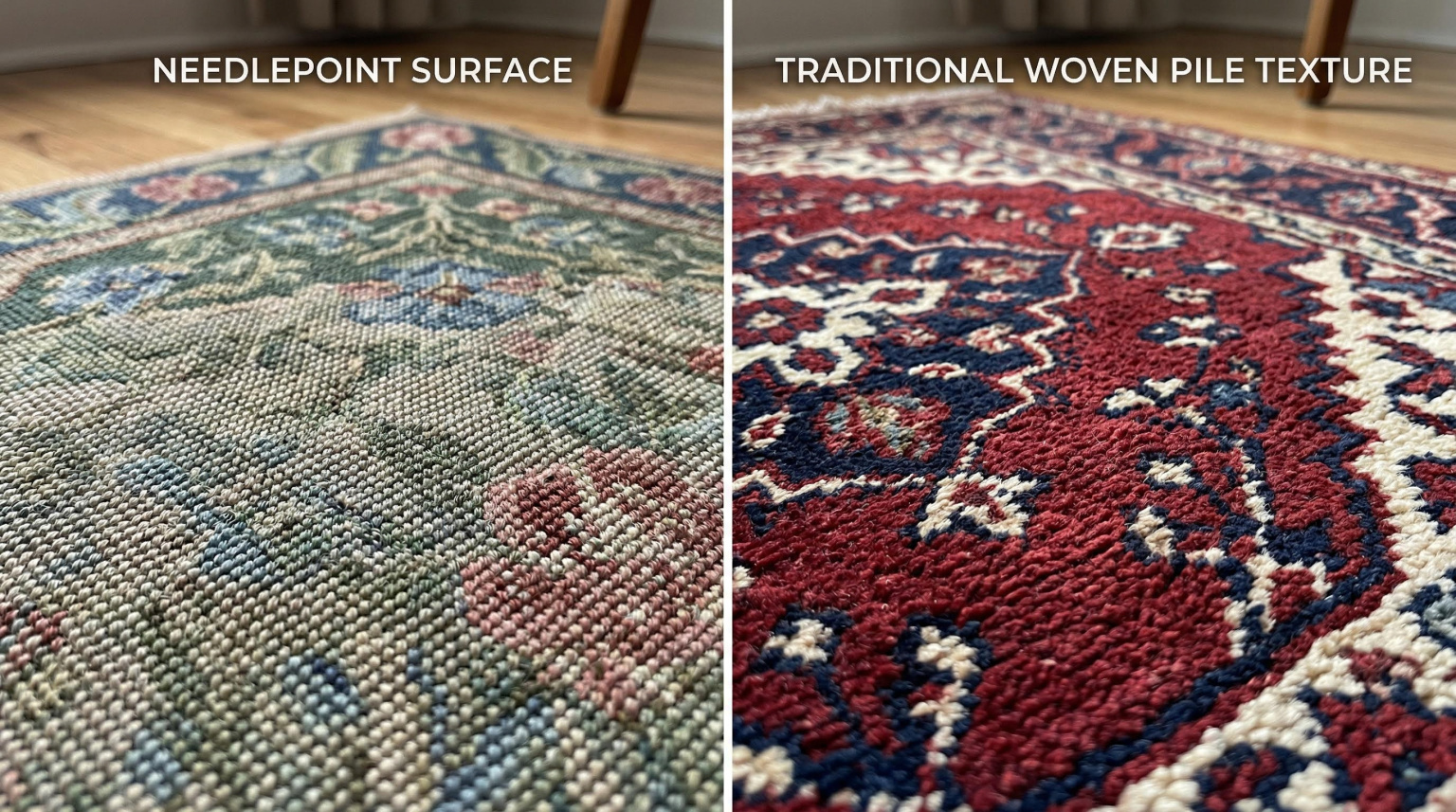
This structural difference affects both texture and durability. Woven rugs, particularly dense wool pieces found in collections of woven rugs, distribute weight through their interlocked threads. Needlepoint rugs distribute wear across thousands of compact stitches anchored to the backing. While they are not as thick as many knotted rugs, their tight stitching provides surprising resilience when placed in moderate-traffic rooms.
Another distinction lies in visual character. Woven and knotted rugs often emphasize texture and pile variation. Needlepoint rugs emphasize line work and crisp imagery. The smooth surface allows patterns to read clearly from a distance, making them suitable for formal interiors where symmetry and proportion matter. Designers often choose needlepoint when they want pattern definition without added bulk.
Materials and Craftsmanship
Wool is the primary fiber used in needlepoint rugs because of its durability and ability to hold saturated dyes. The yarn must be strong enough to withstand repeated stitching and daily foot traffic. The canvas foundation is typically cotton, chosen for its stability and grid structure. After stitching, an additional backing fabric is applied to reinforce the rug and protect floors.
The quality of a needlepoint rug depends on stitch density and yarn consistency. Finer canvas grids allow for more detailed designs but require greater skill and time. Uniform stitching ensures that the surface remains even and that colors align accurately with the pattern. Irregular tension can lead to distortion, so experienced artisans maintain careful control throughout the process.
Because the technique is labor-intensive, needlepoint rugs are often categorized among premium handmade area rugs. Their value reflects the hours of manual work invested in each piece. Unlike mass-produced printed carpets, needlepoint rugs display the subtle irregularities that signal hand craftsmanship. These nuances add depth rather than detract from the overall design.
Design Characteristics and Style Applications
Needlepoint rugs are often associated with traditional interiors, particularly those influenced by European decorative arts. Floral sprays, scrolling acanthus leaves, and central medallions are common motifs. These patterns align well with paneled walls, carved wood furniture, and symmetrical room layouts. In such settings, the rug reinforces architectural rhythm rather than competing with it.
However, needlepoint is not limited to classical themes. Contemporary designers have adapted the technique for modern spaces by simplifying motifs and using restrained color palettes. Monochrome geometric designs or tonal abstract patterns can feel surprisingly current when executed in needlepoint. The flat profile works well beneath dining tables and seating groups without interfering with door clearance.
The smooth surface also makes needlepoint rugs suitable for layered arrangements. Placed over a larger neutral flatweave, a smaller needlepoint rug can define a seating area with precision. Because the texture is controlled and low, furniture rests evenly without wobbling. This structural stability is one of the practical advantages of the technique.
Durability and Maintenance Considerations
While needlepoint rugs are handcrafted, they are not delicate in the way silk rugs can be. Their tightly stitched wool surface handles routine foot traffic in living rooms, bedrooms, and formal dining spaces. However, extremely high-traffic entryways may be better suited to denser woven constructions. Rotating the rug periodically ensures even wear across the stitched surface.
Maintenance is straightforward. Regular vacuuming without aggressive beater bars prevents dust from settling between stitches. Spot cleaning should be done carefully to avoid saturating the canvas backing. Professional cleaning is recommended for deep maintenance, especially for larger or antique pieces. With consistent care, a needlepoint rug can maintain its color and structure for decades.
Because the design sits on the surface rather than being embedded in knotted pile, sharp objects should be avoided. Heavy dragging of furniture can strain stitches over time. Using protective pads beneath table legs reduces pressure on concentrated areas. These practical measures help preserve the integrity of the stitched pattern.
Why Choose a Needlepoint Rug?
A needlepoint rug offers clarity of design that is difficult to replicate with other techniques. The stitch-by-stitch construction allows for crisp outlines and controlled shading. For homeowners who value ornamentation and defined pattern over plush texture, needlepoint provides a structured solution. It complements interiors where detail and proportion are priorities.
There is also a historical dimension to consider. Needlepoint techniques have been practiced for centuries, often associated with decorative embroidery traditions. Owning a needlepoint rug connects contemporary spaces with this lineage of textile artistry. Unlike printed imitations, authentic needlepoint rugs reveal the time invested in each stitch.
In practical terms, their flat profile, firm surface, and detailed imagery make them versatile additions to both traditional and transitional interiors. They work well in rooms that demand refinement without excess thickness. When selected thoughtfully and maintained properly, a needlepoint rug becomes a long-term design element rather than a temporary accent.
A needlepoint rug is defined by embroidery rather than weaving, by stitch density rather than knot count. Its character lies in precision and surface detail. For those exploring handmade textiles, understanding this construction method clarifies where needlepoint fits within the broader category of decorative floor coverings. In the right setting, it delivers structure, pattern, and craftsmanship in equal measure.