
What Is Mid-Century Modern Rug Style?
Mid-century modern rug style is less about nostalgia and more about a particular way of seeing space. It emerged alongside an architectural movement that prized clarity, openness, and a quietly optimistic view of modern life. In the home, these rugs were never meant to shout for attention, yet they were never incidental either. They anchored rooms designed for conversation, music, and long evenings spent with friends, often arranged around low sofas and carefully chosen objects. Understanding mid-century modern rugs means understanding how pattern, colour, and texture can shape atmosphere without overwhelming it.
The period itself, roughly spanning the late 1940s to the mid-1960s, was defined by a confidence in design as a tool for better living. Interiors became lighter, more fluid, and more human-scaled, moving away from heavy ornamentation and rigid formality. Rugs played a central role in this shift, softening open-plan rooms and giving visual structure to furniture that often floated rather than hugged walls. They introduced warmth into spaces dominated by wood, glass, and metal, creating balance rather than contrast. A mid-century modern rug is therefore as much about emotional comfort as it is about visual coherence.
One of the defining characteristics of mid-century modern rug style is its approach to pattern. Geometric forms appear frequently, but they are rarely severe or repetitive. Instead, shapes are softened, offset, or arranged asymmetrically, giving the eye room to wander. There is a sense of movement, as though the pattern were a quiet rhythm rather than a rigid grid. This subtle dynamism allows the rug to sit comfortably with both structured furniture and more relaxed, lived-in surroundings.
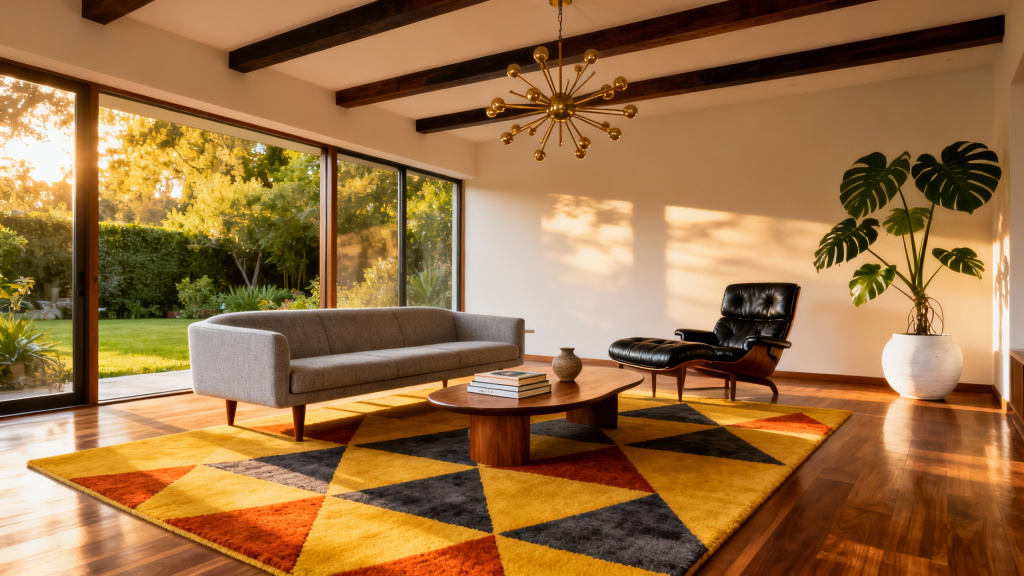
Colour in mid-century modern rugs is equally considered. While bold hues do appear, they are often tempered by earthy neutrals such as warm greys, soft creams, olive greens, and tobacco browns. These palettes reflect the era’s fascination with nature and natural materials, translated into a modern idiom. Rather than stark contrasts, colours tend to be layered or gently juxtaposed, creating depth without drama. In a contemporary home, this restraint is precisely what allows a mid-century rug to feel timeless rather than period-bound.
Texture is another quietly important aspect of the style. Mid-century interiors favoured tactile richness, even when visual decoration was minimal. Rugs were often woven with a density that felt reassuring underfoot, yet not so plush as to appear indulgent. Wool was and remains the material of choice, valued for its resilience, warmth, and ability to hold colour with subtle variation. Many of today’s modern and contemporary area rugs draw heavily on these mid-century principles, offering texture that enhances comfort without sacrificing clarity of design.
It is worth noting that mid-century modern rugs were rarely designed to be centrepieces in isolation. They were conceived as part of a larger interior conversation, responding to furniture, artwork, and architecture. A low-slung teak sofa, a sculptural armchair, or a wall of glass all find grounding through the right rug. The relationship is reciprocal; the rug defines the seating area, while the furniture gives context to the pattern beneath it. This sense of dialogue is what distinguishes thoughtful mid-century design from mere stylistic imitation.
Mid-Century Rugs in Today’s Homes
In contemporary interiors, mid-century modern rugs have found renewed relevance precisely because of their adaptability. They sit comfortably in homes that blend old and new, where inherited pieces coexist with modern lighting and technology. Their measured patterns and balanced palettes offer relief from the visual noise that can accumulate in eclectic spaces. Rather than competing with art or statement furniture, they provide a calm foundation upon which other elements can shine. This quality makes them particularly appealing for open-plan living, where cohesion is essential.
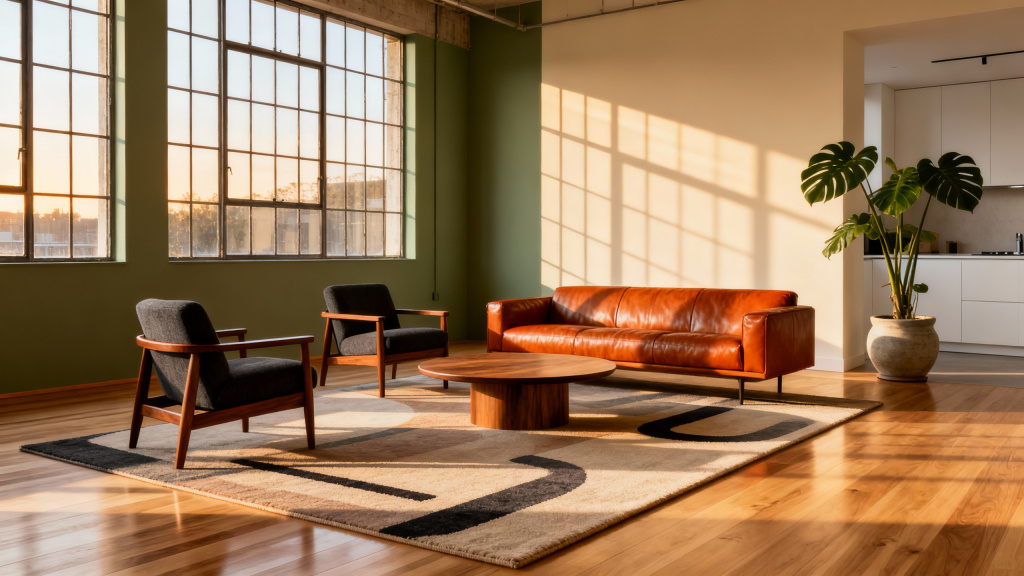
There is also an emotional dimension to their appeal. Mid-century modern rugs evoke a sense of optimism and ease, a reminder of a time when design was deeply connected to everyday pleasure. In a living room, they encourage you to sit on the floor, to stretch out, to inhabit the space rather than simply admire it. In dining areas, they soften acoustics and lend intimacy to shared meals. These rugs are not precious objects to be tiptoed around; they are meant to be lived with, marked gently by time and use.
When selecting a mid-century modern rug today, the question is less about authenticity and more about sensibility. Original vintage pieces carry undeniable charm, but well-crafted contemporary interpretations often offer greater durability and ethical sourcing. Collections that draw on mid-century principles while refining them for modern living strike a particularly satisfying balance. This is especially evident in ranges that prioritise craftsmanship, such as carefully produced hand knotted area rugs, which echo the longevity and material honesty that mid-century designers valued so highly.
Craftsmanship remains central to this ease. Hand-finished rugs bring a depth and individuality that machine-made pieces rarely match. Slight variations in weave and colour lend character, reinforcing the sense that the rug is an object with its own story. Over time, this quality becomes increasingly apparent as the rug settles into the rhythms of daily life. For those who see interiors as evolving rather than static, this lived-in quality is essential.
Design Details That Matter
Scale is one of the most overlooked yet crucial considerations in mid-century modern rug style. Rugs from this tradition are rarely undersized; they tend to extend generously beneath furniture, reinforcing the openness of the space. A rug that is too small can fracture a room, undermining the very clarity that mid-century design seeks to achieve. By contrast, a well-scaled rug creates a sense of continuity, allowing furniture to relate to one another effortlessly. This generosity contributes to the relaxed, unforced feeling that defines the style.
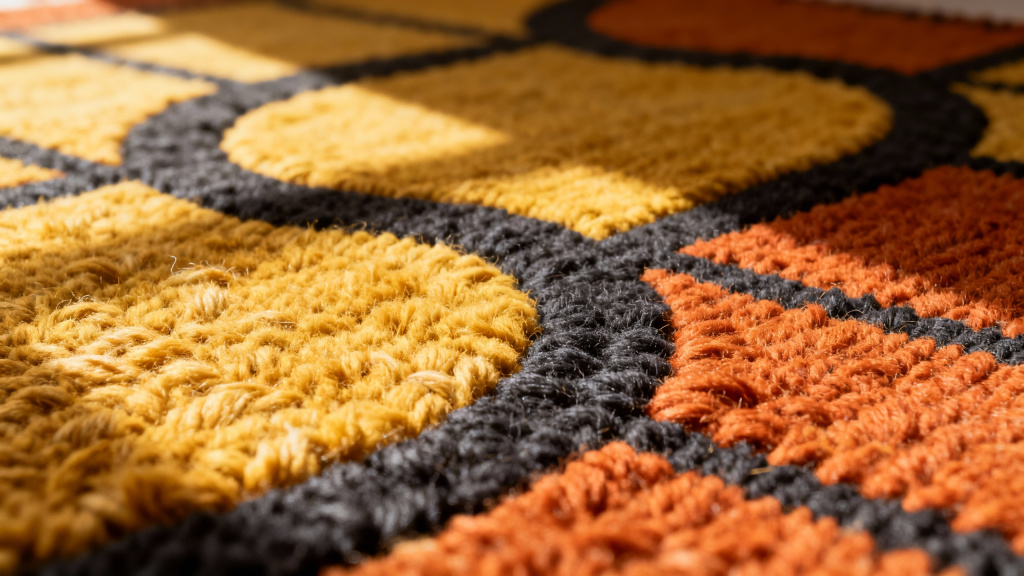
Another subtle detail lies in the way mid-century rugs handle contrast. Rather than sharp borders or ornate framing, many designs allow pattern to fade gently at the edges or dissolve into solid colour. This approach avoids visual rigidity and enhances the rug’s ability to integrate with surrounding materials. It also reflects a broader mid-century interest in organic form, where transitions feel natural rather than imposed. In practice, this means the rug feels like part of the floor itself, not a decorative afterthought.
Brand heritage can also play a role in capturing the essence of mid-century modern rug style. Some manufacturers have a long-standing relationship with the movement, drawing on archival designs and collaborating with contemporary designers to reinterpret them. Brands such as Brink & Campman are particularly adept at this, producing rugs that feel both rooted in mid-century thinking and relevant to modern interiors. Their work illustrates how the style continues to evolve without losing its integrity.
Ultimately, mid-century modern rug style is about restraint with warmth, structure with humanity. It resists excess while embracing comfort, offering visual interest without demanding constant attention. In an age of fast trends and disposable interiors, this quiet confidence feels increasingly relevant. A well-chosen mid-century rug does not date a room; it grounds it, lending continuity as tastes and furnishings evolve. It becomes part of the home’s narrative, a surface upon which everyday life unfolds with understated grace.