
What Size Underpad for an Area Rug? A Practical Guide for Getting It Right
An area rug can define a room, soften acoustics, and anchor furniture, but none of those benefits fully land if the rug itself is constantly shifting or wearing unevenly. That’s where an underpad, sometimes called a rug pad, quietly does the heavy lifting. Choosing the correct size underpad for an area rug is less obvious than it sounds, and many people default to guessing or trimming at random. The result is often a pad that peeks out, bunches up, or fails to protect either the rug or the floor beneath it. Understanding how underpad sizing works is a small but crucial detail that makes a noticeable difference in how a room feels and functions.
Underpads serve several roles at once: they add cushioning, prevent slipping, extend the life of the rug, and protect flooring from abrasion or color transfer. None of those functions work properly if the pad is the wrong size. A pad that is too large can curl at the edges and become visible, while one that is too small can cause the rug to flex and crease. In well-designed interiors, these problems are subtle but disruptive, undermining an otherwise thoughtful space. Choosing the right underpad size is less about strict rules and more about understanding proportions, materials, and how the rug will be used.
How an Underpad Should Relate to the Rug
The general principle is simple: an underpad should be slightly smaller than the rug itself. Most interior designers and rug specialists recommend that the pad be trimmed or selected to sit about one to two inches inside the rug’s perimeter on all sides. This margin ensures that the pad stays hidden and that the rug’s edges can lie flat against the floor. When a rug is walked on, its edges naturally compress and relax, and that small buffer allows movement without revealing the pad underneath.
For standard rectangular rugs, this sizing approach is straightforward. If your rug measures 8' x 10', an ideal underpad would be approximately 7'10" x 9'10", or even slightly smaller depending on the rug’s thickness. The goal is consistency rather than precision down to the millimeter. A pad that mirrors the rug’s shape but sits just inside its outline will provide even support without interfering with the rug’s visual boundary. This principle applies whether the rug is placed in a living room, bedroom, or dining area.
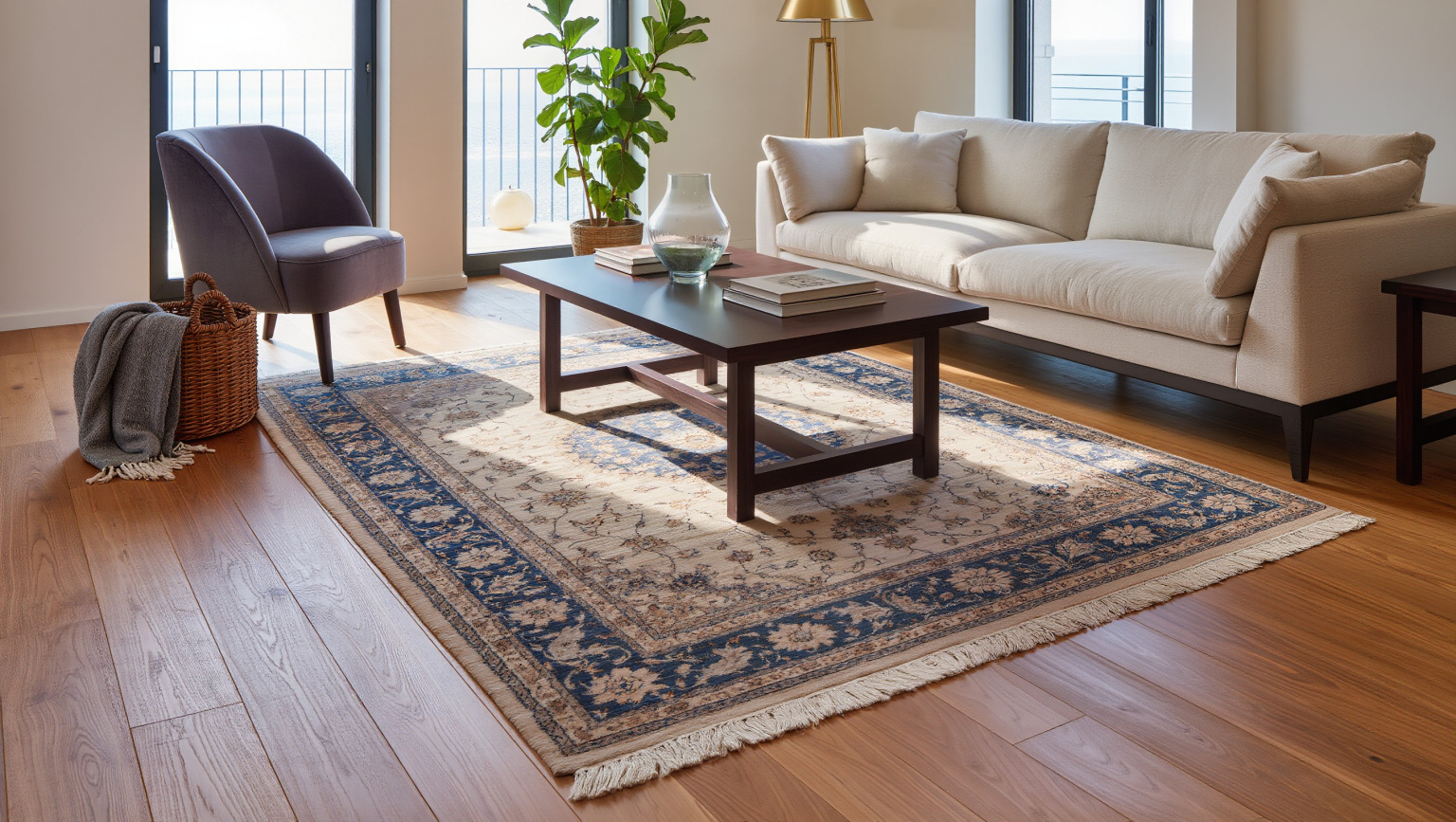
Irregularly shaped rugs, such as rounds or ovals, follow the same logic but require more attention. In these cases, it is often best to buy a slightly larger pad and trim it carefully to match the rug’s contour, maintaining that one-to-two-inch inset. This ensures full coverage while avoiding visible edges. Taking the time to trim properly is especially important in open-plan spaces, where rugs are visible from multiple angles and imperfections are easier to spot.
Room Function and Furniture Placement Matter
The correct underpad size is also influenced by how the rug interacts with furniture. In living rooms, rugs often sit partially under sofas, chairs, and coffee tables. Here, a properly sized underpad helps distribute weight evenly, preventing the rug from stretching or compressing unevenly over time. If the pad stops too far short of the rug’s edges, areas under heavy furniture may sink differently from exposed sections, creating subtle waves or ripples.
Dining rooms present a slightly different challenge. Chairs are constantly moved in and out, placing stress on the rug’s edges. In this case, the underpad should still be slightly smaller than the rug, but choosing a pad with enough density to support movement is just as important as size. A well-sized pad keeps the rug stable while allowing chairs to glide more smoothly, reducing wear at the corners. This is especially relevant for larger area rugs used in dining rooms, where durability and long-term performance matter.
Bedrooms tend to be more forgiving, but sizing still matters. Rugs placed under beds often extend beyond the frame, and the pad should match that footprint while remaining discreet. Because foot traffic is lighter, the emphasis here is on comfort and insulation rather than extreme grip. Even so, a pad that is too large can bunch near the corners, creating a tripping hazard or an uneven look. A clean, inset pad preserves the calm, layered aesthetic that bedroom rugs are meant to create.
Rug Construction and Thickness Considerations
The type of rug you’re using should influence how you think about underpad size. Flatwoven rugs, for example, are typically thinner and more flexible than pile rugs. Because of this, they benefit greatly from precise underpad sizing to prevent shifting and curling. A pad that is even slightly oversized under a flatweave is more likely to telegraph through the rug’s surface or become visible at the edges. For these rugs, accuracy matters, especially when working with flatwoven area rugs that emphasize clean lines and subtle texture.
Hand-knotted rugs, on the other hand, often have more weight and structure. While they are less prone to slipping, they still require underpads to protect both the rug and the floor. In this case, the pad’s size should still be slightly smaller than the rug, but the margin can be a bit more forgiving. The density and craftsmanship of hand-knotted pieces mean that the pad’s primary role is cushioning and floor protection rather than grip alone. This makes thoughtful sizing a matter of balance rather than strict measurement, particularly with hand-knotted area rugs intended as long-term investments.
Thickness also plays a role in visual perception. A thicker pad can subtly lift a rug, giving it presence and comfort, but only if it is sized correctly. When a thick pad extends too close to the edge, it can create a rounded or “pillowed” look that detracts from the rug’s design. Pulling the pad back slightly ensures the rug’s edge remains crisp and intentional, preserving its silhouette within the room.
Custom Sizes, Trimming, and When to Adjust
Not all rugs conform to standard dimensions, and not all rooms are perfectly square. In these situations, buying a custom-sized underpad or trimming one to fit is often the best approach. Many high-quality pads are designed to be easily cut with household scissors, allowing you to tailor the fit precisely. The key is patience: measure carefully, mark lightly, and trim gradually rather than all at once. This method helps maintain an even inset and avoids accidental over-cutting.
There are also cases where slightly adjusting the underpad size makes sense for practical reasons. For example, if a rug is placed directly against a wall on one side, the pad can be cut closer to the edge there while maintaining a larger inset on exposed sides. This kind of adjustment is invisible once the rug is in place and can improve stability where it’s needed most. Thoughtful customization like this reflects a deeper understanding of how rugs function in real living spaces, not just in catalogs.
It’s worth noting that underpads, like rugs, may need replacement over time. If you change rooms, flooring, or furniture layouts, reassessing pad size is a good idea. A pad that worked perfectly in one context may be slightly off in another. Treating the underpad as an integral part of the rug rather than an afterthought helps ensure that both age gracefully together. In the long run, this attention to detail pays off in comfort, durability, and visual coherence.
Choosing the right size underpad for an area rug is not about memorizing a single measurement but about understanding relationships. The rug, the pad, the floor, and the furniture all interact in subtle ways that shape how a room feels day to day. By selecting a pad that mirrors the rug’s shape while sitting just inside its edges, you create a foundation that supports both form and function. It’s a quiet decision, but one that makes every step across the room feel more considered.