
Why Persian Rugs Command Such High Prices
Persian rugs have long occupied a rarefied position in the world of interior design, existing somewhere between functional furnishing and collectible art. Their prices often surprise first-time buyers, especially when compared to mass-produced area rugs that may appear visually similar at a glance. Yet the cost of a Persian rug is not arbitrary, nor is it driven by branding alone. It reflects a convergence of labor, history, material integrity, and cultural continuity that few other home objects can claim. To understand why these rugs are expensive is to understand why they have endured for centuries without losing relevance.
Unlike contemporary rugs designed primarily to follow trends, Persian rugs are created within a framework of inherited knowledge and regional identity. Every motif, color choice, and weaving decision is rooted in a lineage that often spans generations. This continuity is not preserved for nostalgia’s sake but because it produces textiles of exceptional resilience and visual depth. When designers and collectors invest in Persian rugs, they are not paying for novelty; they are paying for permanence. That permanence is earned through time, skill, and an uncompromising approach to craftsmanship.
Labor, Time, and the Discipline of Hand-Knotting
The most significant factor behind the cost of Persian rugs is the labor-intensive process by which they are made. Authentic Persian rugs are hand-knotted, not tufted or machine-woven, and each knot is tied individually by a skilled artisan. Depending on the size and knot density, a single rug can require several months to multiple years of continuous work. This is not repetitive labor but highly technical craft, requiring precision, muscle memory, and a trained eye for symmetry. The price reflects thousands of hours of human effort compressed into a single object.
Hand-knotting also limits production in a way that industrial manufacturing never could. A weaver can only produce a finite amount of work per day, and errors cannot be easily corrected once knots are set. This constraint introduces scarcity, not artificially, but as a natural consequence of the process itself. When buyers browse collections of hand-knotted area rugs, they are seeing objects that cannot be scaled or rushed without sacrificing quality. The cost is inseparable from the pace of human hands.
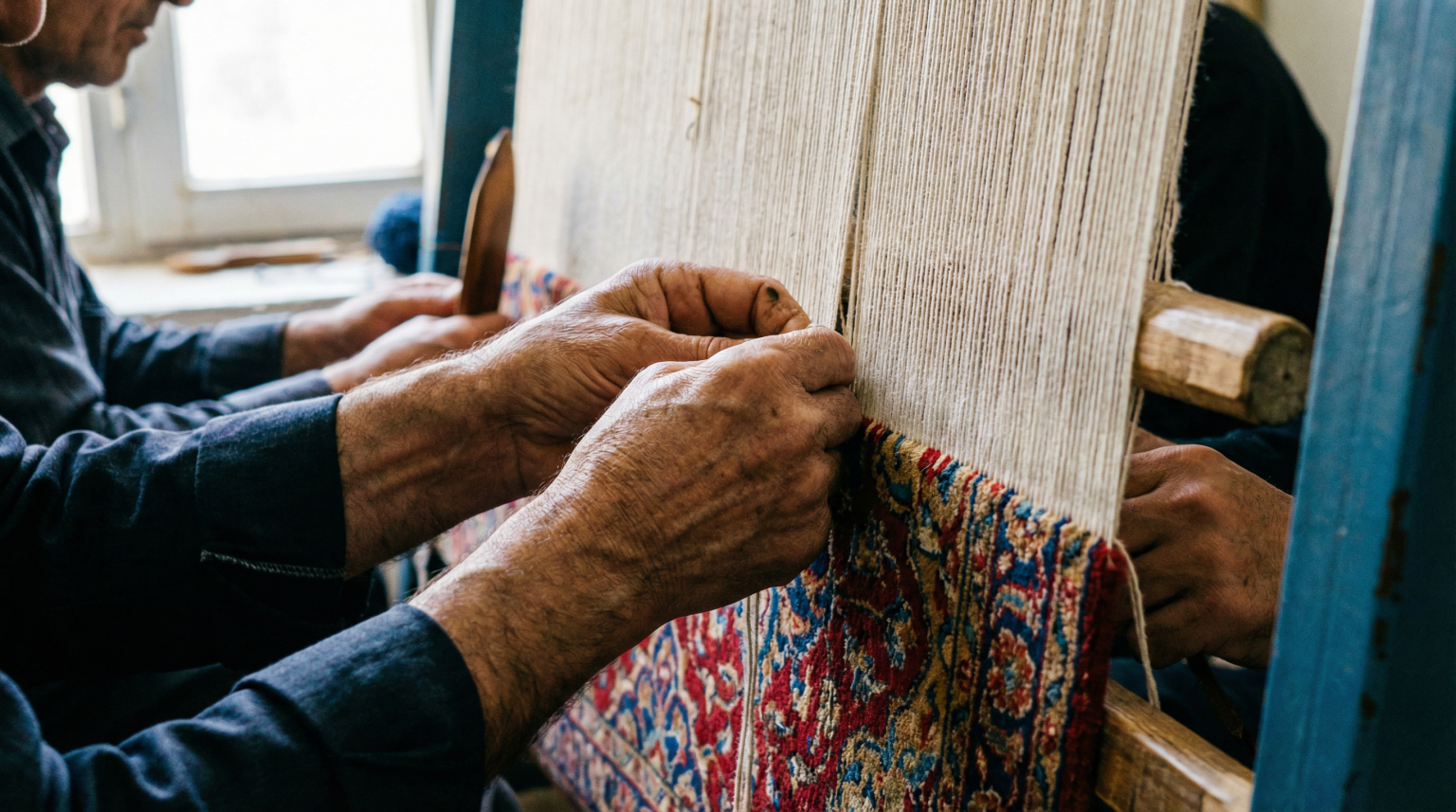
Labor costs are further shaped by the preservation of traditional working conditions. Many weaving communities operate cooperatively, ensuring fair compensation and sustaining regional economies. While this approach may increase the retail price, it protects the integrity of the craft and prevents the erosion of skills that have survived for centuries. In an era dominated by automation, the refusal to mechanize becomes a value in itself. Persian rugs remain expensive precisely because they resist shortcuts.
Materials That Improve With Age
The materials used in Persian rugs contribute significantly to their cost, and unlike synthetic alternatives, these materials age gracefully. High-quality wool, often sourced from highland sheep, contains natural lanolin that gives the fibers elasticity and sheen. This allows the rug to withstand decades of foot traffic without becoming brittle or dull. Silk, used selectively for highlights or entire compositions, adds luminosity and detail that cannot be replicated by artificial fibers. These raw materials are chosen not for affordability but for longevity.
Equally important are the dyes used to color the fibers. Traditional Persian rugs rely on natural dyes derived from plants, insects, and minerals, resulting in hues that mellow rather than fade. This subtle evolution of color is one reason antique Persian rugs remain so desirable. Synthetic dyes, by contrast, often degrade unevenly, leaving harsh or washed-out tones. When buyers explore collections of Persian rugs, they are responding to a palette shaped by chemistry, environment, and time.
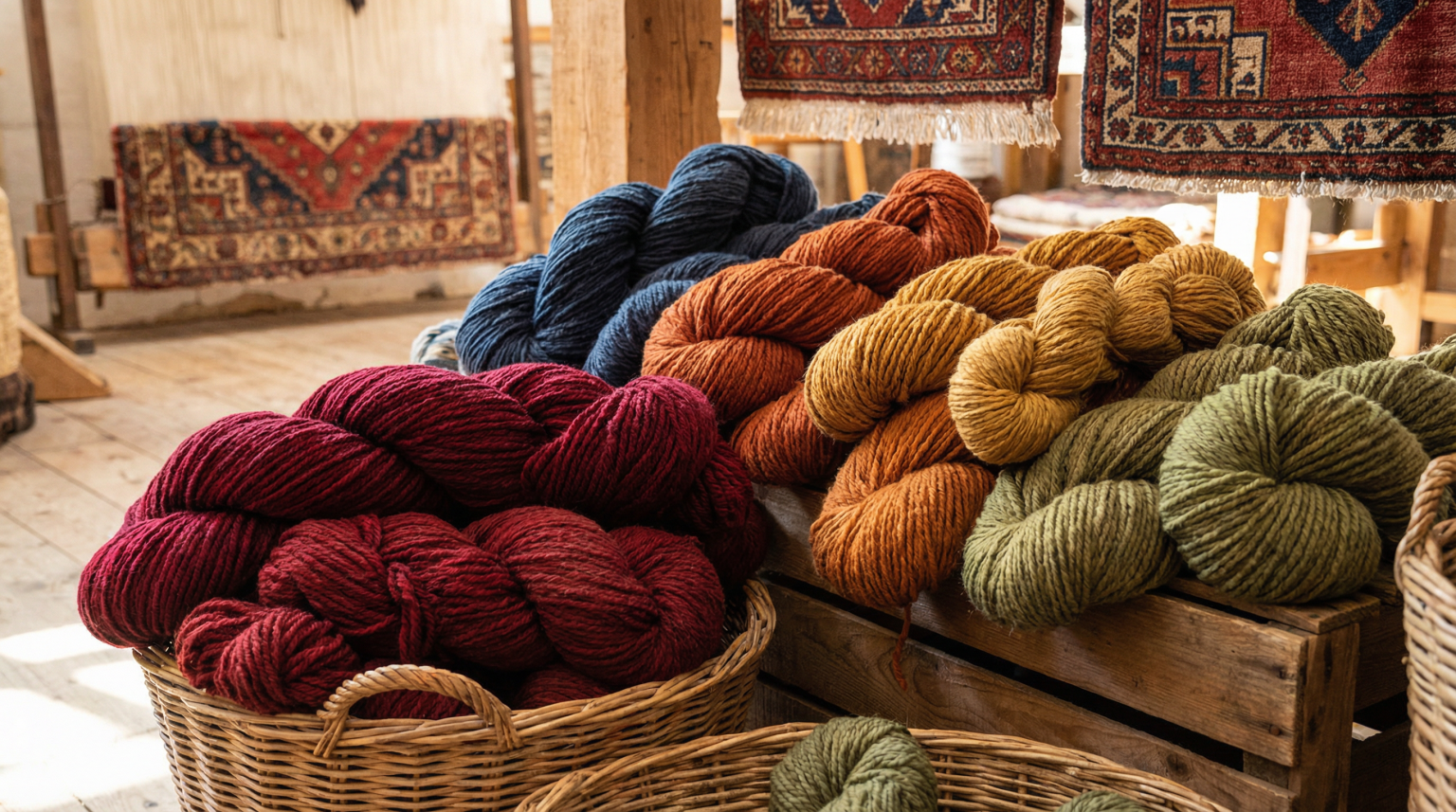
Material quality also influences repairability, an often-overlooked aspect of value. A well-made Persian rug can be restored repeatedly over its lifetime, sometimes outlasting multiple interiors and owners. Synthetic rugs, even expensive ones, rarely justify restoration once damaged. The initial investment in natural materials therefore extends the rug’s usable life exponentially. What appears costly upfront often proves economical over generations.
Design Intelligence and Cultural Authorship
Every Persian rug is a product of design intelligence that predates modern design education by centuries. Patterns are not improvised; they are codified visual languages associated with specific regions such as Tabriz, Isfahan, or Kashan. These designs encode cultural memory, religious symbolism, and environmental references, creating compositions that feel both deliberate and organic. The complexity of these patterns demands advanced planning, often memorized rather than drawn. This intellectual labor is embedded invisibly within the rug.
Unlike contemporary rugs that follow globalized trends, Persian rugs maintain authorship tied to place. This geographic specificity adds both authenticity and accountability to the work. Collectors can often identify the origin of a rug by its weave, color balance, and motifs alone. Such traceability enhances value, much like provenance in fine art. It also explains why truly authentic pieces cannot be mass-produced or convincingly replicated.
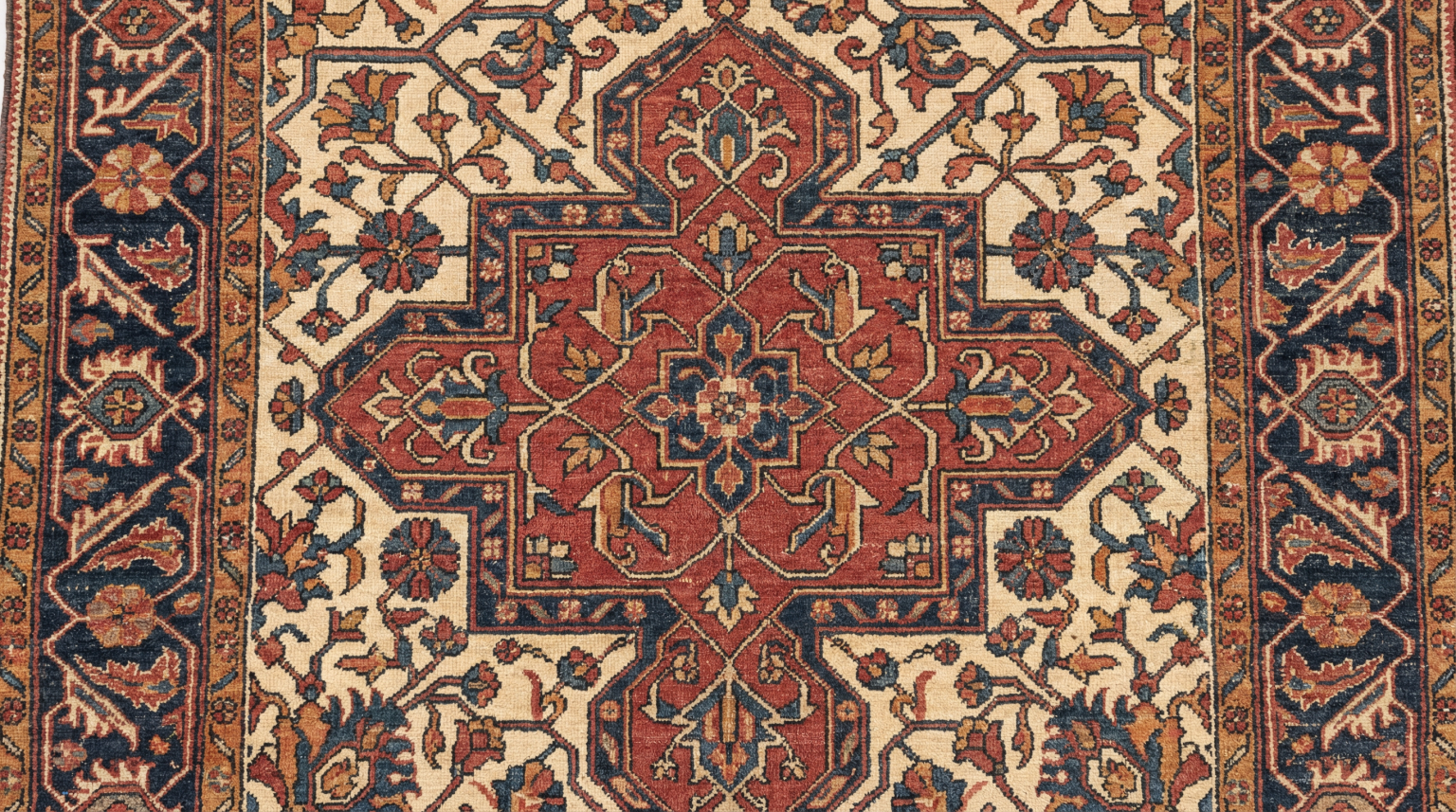
In the context of modern interiors, this design intelligence offers versatility rather than limitation. Persian rugs function as visual anchors, grounding minimalist spaces and enriching traditional ones. Their patterns absorb rather than dominate surrounding elements, allowing them to coexist with evolving design preferences. This adaptability contributes to their enduring demand within the luxury area rugs market. Design that transcends trend cycles naturally commands higher prices.
Durability as an Economic Argument
One of the most compelling reasons Persian rugs are expensive is also the simplest: they last. A properly cared-for Persian rug can remain structurally sound for over a century, even under daily use. This durability is not accidental but engineered through dense knotting, balanced tension, and resilient materials. When evaluated on a cost-per-year basis, Persian rugs often outperform cheaper alternatives that require replacement every decade. Longevity transforms expense into investment.
This durability also allows Persian rugs to move fluidly through different stages of life. They can transition from formal living rooms to family spaces, from private homes to offices, without losing relevance or integrity. Many are passed down as heirlooms, accumulating sentimental and financial value over time. Few household objects can claim such continuity. The price reflects not just what the rug is today, but what it will remain capable of becoming.
For buyers exploring handmade area rugs, Persian examples often stand apart in both feel and performance. The density underfoot, the clarity of design, and the quiet confidence of craftsmanship distinguish them immediately. These qualities are difficult to quantify but easy to recognize once experienced. They justify the premium without requiring explanation.
The Market, Scarcity, and Cultural Preservation
Finally, Persian rugs are expensive because their supply is inherently limited while demand remains global. Political, economic, and environmental factors have reduced the number of active weaving centers over time. Younger generations are less inclined to pursue the demanding training required, making skilled weavers increasingly rare. As production slows, existing rugs gain value not only as objects but as representatives of a diminishing tradition. Scarcity, in this case, is neither manufactured nor temporary.
At the same time, global appreciation for authentic craftsmanship continues to grow. Designers, collectors, and homeowners alike seek objects with depth and meaning, particularly in response to disposable culture. Persian rugs answer that desire with quiet authority. Their cost becomes a reflection of cultural preservation as much as personal taste. Buying one is an act of participation in a living history.
In the end, Persian rugs are expensive because they refuse to compromise. They prioritize human skill over efficiency, material integrity over convenience, and cultural continuity over trend responsiveness. These choices accumulate value slowly but decisively. What the buyer receives is not merely a floor covering, but a work of enduring relevance. In a world of accelerating obsolescence, that kind of permanence is rare—and rightly priced.